Idea Bank — Request for Climate Startups
Sandponics
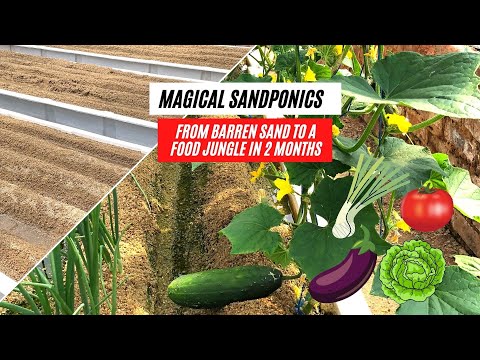
Grow crops in sand fed by nutrient solution on coastal chars and flood-prone deltaic land.
The ask
Commercialise sandponics — soilless cultivation in a sand medium irrigated with diluted nutrient solution — as a scalable food-production system for Bangladesh's coastal chars and sandy riverbeds where conventional soil-based agriculture is impossible or highly seasonal.
Why now
Sandponics has been tested by BARI (Bangladesh Agricultural Research Institute) and several NGOs in coastal Bangladesh with promising yield results for tomatoes, cucumbers, and leafy greens — but has not been commercialised. The cost of drip-irrigation components has dropped 60% in five years. Bangladesh's expanding urban middle class is creating sustained demand for off-season and out-of-season vegetables, which command a 2–4× premium over in-season commodity prices.
Why Bangladesh
Bangladesh has an estimated 500,000+ hectares of sandy char land and coastal riverbank that sits fallow for most of the year — land that landowners pay virtually nothing to hold. The Jamuna, Padma, and Meghna deltas produce vast sand deposits annually. Sandponics requires no soil amendment, no tillage, and far less water than conventional irrigation — critical advantages in salinity-affected coastal zones where groundwater is often brackish. Low setup cost (simple polythene channels or open-sand beds) makes it accessible to small char farmers with micro-credit financing.
As a business
Revenue comes from direct vegetable sales at wholesale (৳30–90/kg depending on crop) with a blended margin after nutrient solution, seed, and labour costs of 35–55%. A 1-hectare sandponics unit at commercial density produces 50–80 tonnes of mixed vegetables per year — generating ৳15–35 lakh in gross revenue. Franchising the nutrient-solution supply (branded concentrate at ৳300–500/litre, one litre makes 200 litres of fertigation solution) to individual farmer-operators creates a recurring, capital-light revenue stream beyond operating your own farm.
Economics
Move the sliders to model a sandponics farm. Defaults are order-of-magnitude estimates — pressure-testing them is part of what a founder pitches us.
Model a sandponics vegetable farm
Clears its setup cost after ~10 months, then profit (volt) from there. Hover or tap the chart for any month.
Illustrative model — defaults are order-of-magnitude estimates from public data, not a forecast. Pressure-test every number before you build.
What AimHuge would back
A founder who has run a sandponics unit through at least one full growing cycle in a coastal char environment and can show yield and cost data — not just greenhouse pilot results. We are particularly interested in founders who have designed a nutrient-concentrate supply chain, since reliable fertigation inputs are the operational chokepoint in distributed sandponics networks.
Impact
Sandponics on Bangladesh's 500,000+ ha of fallow char and coastal sandbar land converts essentially zero-productivity land into food-producing assets, displacing vegetable imports that otherwise arrive by truck from mainland districts with high post-harvest losses (30–40%). The system uses 60–70% less water than conventional surface irrigation — critical in salinity-stressed coastal zones — and requires no synthetic soil amendment, avoiding the nitrous-oxide and diesel emissions embedded in conventional tillage. At 1 ha commercial density, a sandponics unit produces 50–80 tonnes of vegetables annually, improving nutritional security for some of Bangladesh's most food-insecure char communities.
Also being built elsewhere
Companies proving the model in other markets.
More Regenerative Agriculture ideas
Other climate businesses we want built.