Idea Bank — Request for Climate Startups
Robotic Farms
Fully automated cultivation systems that cut labour costs and enable chemical-light food production.
The ask
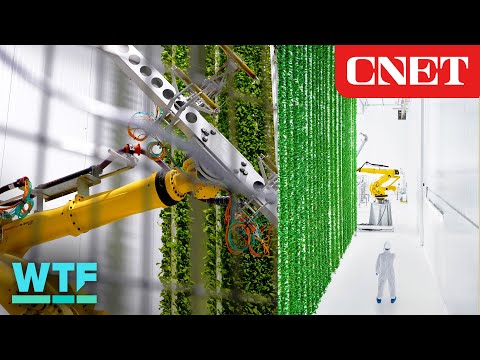
Build or operate autonomous indoor or greenhouse farms in Bangladesh — using robotics for seeding, irrigation, harvesting, and monitoring — to produce consistent, high-value crops with a fraction of the manual labour and chemical inputs of conventional farming.
Why now
Agricultural robot costs have fallen sharply — basic harvesting arms and mobile platforms that cost $150 k in 2018 are now available under $30 k. Computer-vision crop-scouting kits built on commodity GPUs are already deployed in Southeast Asia. The global food-automation wave is hitting the proof-of-concept phase in tropical climates, where heat-tolerant controlled environments are the hard part — and Bangladesh sits right at that frontier.
Why Bangladesh
Bangladesh loses an estimated 15–20% of vegetable yield to post-harvest spoilage and inconsistent supply chains; a climate-controlled robotic facility eliminates both. Arable land per capita is among the lowest in the world, making vertical or high-density production economically rational. Labour costs are rising in peri-urban Dhaka — the business case for automation strengthens every year. And the country already imports significant volumes of high-value produce (tomatoes, capsicums, leafy greens) that could be displaced by domestic controlled-environment output.
As a business
Revenue comes from B2B supply contracts with supermarkets, hotel chains, and institutional canteens — customers who pay a premium for consistent year-round quality and food-safety traceability. The margin lever is yield-per-square-metre: at 8–12x conventional field density, even a modest facility breaks even on produce sales. A secondary revenue stream is selling or leasing the automation kits to rural co-operatives as the technology matures.
Economics
Move the sliders to model your own robotic farm. Defaults are order-of-magnitude estimates — pressure-testing them is part of what a founder pitches us.
Model a robotic farm
Does not break even within 5 years at these inputs — adjust the sliders. Hover or tap the chart for any month.
Illustrative model — defaults are order-of-magnitude estimates from public data, not a forecast. Pressure-test every number before you build.
What AimHuge would back
A founder who has already run a pilot cell — even 50 sq m — and has a signed offtake letter from at least one institutional buyer. We are looking for an operator-technologist pair: someone who understands controlled-environment agronomy and someone who can integrate and maintain the hardware. Pure hardware importers without agronomic depth need not apply.
Impact
A 1 000 m² robotic indoor farm in Bangladesh avoids roughly 20–30 tCO₂e/year compared to conventional supply chains (eliminating cold-chain losses, field-to-market transport, and synthetic fertiliser runs) while producing a consistent year-round yield unaffected by cyclone, flood, or drought. The farm displaces imported premium vegetables (cherry tomatoes, herbs, microgreens) that currently consume scarce foreign exchange, returning an estimated USD 25 000–40 000 in hard currency annually at default scale. Although direct job creation is lower than conventional farming per square metre, the facility anchors downstream jobs in logistics, retail, and farm-tech maintenance, and the model demonstrates technology transfer pathways for Bangladesh's agriculture sector.
Also being built elsewhere
Companies proving the model in other markets.
Best-capitalised robotic vertical farm ($940M raised); proves AI-robotics model but highlights the high-opex risk for low-margin crops.
Premium strawberry vertical farm with $150M Series C (2026); demonstrates that high-value crops — not leafy greens — are the path to unit economics.
More Regenerative Agriculture ideas
Other climate businesses we want built.