Idea Bank — Request for Climate Startups
Phytoremediation with Cash Crops
Restore heavy-metal-contaminated industrial land using aromatic cash crops that extract pollutants while generating revenue.
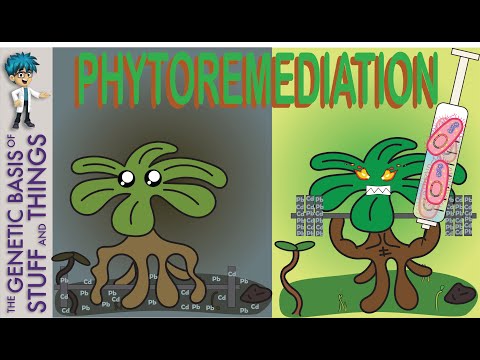
The ask
Offer a commercial phytoremediation service to industrial site owners (brick fields, tanneries, legacy chemical plants) in Bangladesh: plant high-value aromatic crops — vetiver, lemongrass, or turmeric — that extract heavy metals from soil while producing a harvestable cash crop, then sell the harvested biomass to essential-oil processors or compost facilities.
Why now
The lavender-on-coal-mine proof point from Central Europe validated the core economics: cash crops with demonstrated heavy-metal uptake can make phytoremediation self-financing rather than a pure remediation cost. Bangladesh's tannery cluster relocation from Hazaribagh to Savar left behind approximately 200 acres of severely chromium and lead-contaminated land in Dhaka. The Department of Environment issued remediation orders in 2021 with no funded solution. Aromatic crop essential-oil prices (vetiver at $200–600/kg) are high enough to make even low per-hectare yields economically significant.
Why Bangladesh
Bangladesh has substantial contaminated industrial land from tanneries (Hazaribagh, Savar), brick kilns (scattered across Dhaka, Narayanganj, Gazipur), and garment dyehouses. Most of this land is either idle or generating legal liability for its owners. Vetiver, lemongrass, and turmeric are all proven in Bangladesh's climate (tropical, monsoon) — the Bangladesh Agricultural Research Institute has published cultivation guides. Essential oil exports from Bangladesh are negligible today, meaning there is no entrenched competitor.
As a business
Revenue is a combination of remediation service fees (paid by landowners — ৳200,000–600,000/hectare over a 3–5 year programme) and essential oil / dried biomass sales. The service company owns the crop during the remediation period and sells output; the landowner pays a programme fee to receive a remediation certificate at the end. After year 3, soil metal concentrations typically drop below regulatory limits, and the land can be sold or redeveloped — giving the landowner a clear financial incentive to fund the service.
Economics
Move the sliders to model your own phytoremediation business. Defaults are order-of-magnitude estimates — pressure-testing them is part of what a founder pitches us.
Model a phytoremediation cash-crop business
Does not break even within 5 years at these inputs — adjust the sliders. Hover or tap the chart for any month.
Illustrative model — defaults are order-of-magnitude estimates from public data, not a forecast. Pressure-test every number before you build.
What AimHuge would back
A founder with soil science, agronomy, or environmental engineering credentials who has already run a small pilot and has soil-test data showing measurable metal uptake. The pitch must include a landowner — ideally a tannery or brick-kiln operator — who has agreed in principle to the service model. Bangladesh fit is medium because the tannery contamination is real but the land tenure and regulatory path to a remediation certificate needs to be worked out with the Department of Environment first.
Impact
Vetiver and lemongrass phytoremediation of 50 contaminated hectares can extract lead, cadmium, and chromium from brick-field and tannery soils over 3–5 seasons, returning the land to productive use and reducing the heavy-metal runoff load entering Bangladesh's rivers and groundwater. The harvested biomass produces essential oils for the export cosmetics market, displacing synthetic-fragrance imports and keeping foreign exchange in Bangladesh. At 50 ha under management, the programme creates roughly 30 full-time agricultural jobs in areas where industrial contamination has already depressed land values and livelihoods.
Also being built elsewhere
Companies proving the model in other markets.
Over 15 years of commercial phytoremediation experience with 70 000+ trees installed, proving turnkey service delivery economics.
Uses plant endophytes to accelerate contaminant uptake — comparable technology base applied to commercial site-remediation contracts.
More Regenerative Agriculture ideas
Other climate businesses we want built.