Idea Bank — Request for Climate Startups
Native Plant Nursery
Commercial nursery specialising in native Bangladeshi species for restoration and urban greening.
The ask
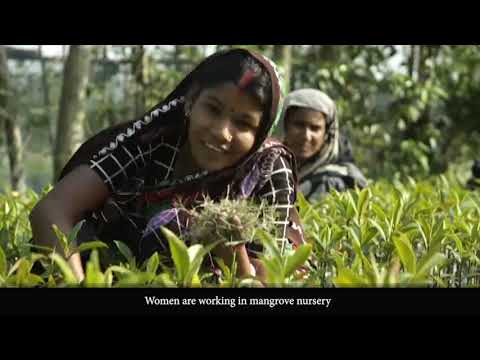
Run a commercial nursery that propagates native Bangladeshi plant species — mangrove associates, riverbank stabilisers, shade trees, medicinal herbs — and sells them to government afforestation programmes, corporate ESG landscapers, urban developers, and NGOs doing ecosystem restoration.
Why now
Bangladesh's Forest Department, city corporations, and BEZA (economic zones) are all under mandate to green their land holdings, but the commercial nursery trade is dominated by ornamental exotics (Chinese palms, bougainvillea) that offer no ecosystem value. International buyers paying for biodiversity credits and mangrove carbon offsets increasingly require verified native species. The global nature-based solutions (NbS) financing market is growing rapidly and native species nurseries are the supply-chain bottleneck.
Why Bangladesh
The Sundarbans biome supports hundreds of endemic and near-endemic plant species with minimal commercial propagation. Coastal embankment revegetation programmes (BWDB) need millions of native seedlings per year and currently struggle to source them reliably. Dhaka's urban heat island problem is documented and the city's master plan calls for a 15 % green cover target — currently well under 10 %. Nursery land, labour, and water costs in Bangladesh are low enough to make large-scale propagation economically viable.
As a business
Revenue streams: government tenders for afforestation (BEZA, forest department), corporate ESG contracts (garment factories, banks seeking LEED certification), and retail sales through garden centres and online delivery. Margin is highest on rare and slow-growing species that commercial nurseries don't stock. Carbon-offset certification of mangrove restoration plantings, where the nursery supplies verified native propagules, adds a longer-duration revenue stream once voluntary carbon markets settle.
Economics
Move the sliders to model your own native plant nursery. Defaults are order-of-magnitude estimates — pressure-testing them is part of what a founder pitches us.
Model a native plant nursery
Does not break even within 5 years at these inputs — adjust the sliders. Hover or tap the chart for any month.
Illustrative model — defaults are order-of-magnitude estimates from public data, not a forecast. Pressure-test every number before you build.
What AimHuge would back
A founder with a botany or horticulture background who has already identified and propagated at least 20 native species and has an active relationship with one government or corporate buyer. The business is defensible through species knowledge and accreditation — we want to see that moat articulated clearly in the pitch.
Impact
A nursery scaling to 36 000 plants/month replaces ornamental exotics with native species across coastal embankment, urban heat-island, and afforestation programmes — each native tree sequesters roughly 10–20 kg CO₂/year versus zero for the bougainvillea it replaces. At Bangladesh scale, demand from BWDB embankment programmes alone requires tens of millions of seedlings annually, creating hundreds of direct nursery jobs and eliminating the hard-currency spend on imported ornamental stock. Where plantings qualify for mangrove or afforestation carbon certification, the nursery sits at the supply-chain chokepoint for verified native propagules — a position that earns a significant biodiversity co-benefit premium from voluntary carbon buyers.
Also being built elsewhere
Companies proving the model in other markets.
Proves that native-species and regenerative nursery supply chains can underpin profitable design-and-supply businesses at scale.
Demonstrates that verified native-species afforestation programmes generate bankable carbon credits and attract institutional buyers.
More Regenerative Agriculture ideas
Other climate businesses we want built.