Idea Bank — Request for Climate Startups
Microgreens Urban Farm
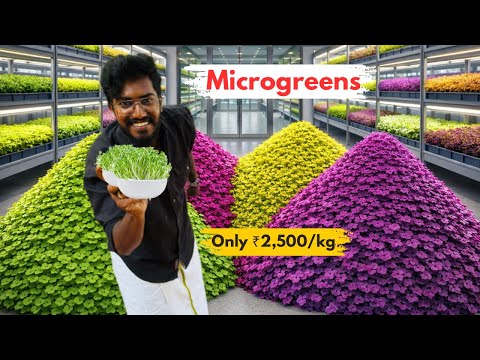
Set up small-footprint microgreens trays supplying nutrition-dense baby greens to urban households and canteens.
The ask
Build a franchise or hub-and-spoke microgreens production business in Dhaka and other Bangladeshi cities — supplying nutrition-dense baby greens (sunflower, pea shoots, radish, broccoli) to urban households, restaurants, hospital canteens, and school meal programmes through weekly subscription delivery.
Why now
Dhaka's urban middle class is growing at 3–4% annually and its demand for fresh, safe, traceable produce is running ahead of supply. Microgreens have 4–40x the nutrient density of mature leaves, grow to harvest in 7–14 days with no pesticides, and require only trays of coco-peat substrate — no arable land. The unit economics of a single 10 sq m tray setup are positive within three months. Bangladesh's garment sector workforce, concentrated in city peripheries, is a large, underserved canteen market with documented micronutrient deficiency problems.
Why Bangladesh
Urban food insecurity in Bangladesh is driven not by calorie shortage but by micronutrient deficiency — particularly iron, zinc, and folate — exactly what leafy microgreens provide in concentrated doses. Flood seasons, which regularly disrupt conventional vegetable supply chains for weeks, create acute supply windows where local controlled-environment growers command a strong price premium. The grow-at-home kit variant — a tray, a seed sachet, coco-peat — is a product that sells well to Dhaka's apartment-dwelling middle class and requires almost no capital.
As a business
Revenue from B2B canteen and restaurant supply (weekly delivery contracts at ৳400–800 per kg) provides the anchor cash flow. D2C subscription boxes to households (৳600–1,200 per month for a weekly fresh tray delivery) add margin and brand equity. The franchise or satellite-grower model — selling starter kits to home growers who sell back the harvest — scales production without capital intensity. Carbon and micronutrient health metrics support CSR and impact-investor interest.
Economics
Move the sliders to model your own microgreens urban farm. Defaults are order-of-magnitude estimates — pressure-testing them is part of what a founder pitches us.
Model a microgreens urban farm
Does not break even within 5 years at these inputs — adjust the sliders. Hover or tap the chart for any month.
Illustrative model — defaults are order-of-magnitude estimates from public data, not a forecast. Pressure-test every number before you build.
What AimHuge would back
A founder who is already selling microgreens — even from a spare bedroom — and has at least 10 paying customers including one institutional account. We care more about demonstrated customer retention than production scale. The franchise or satellite-grower model is what we would want to fund, not a single farm.
Impact
Microgreens production in Dhaka avoids the 6–12 hour open-truck journey from peri-urban farms, eliminating an estimated 0.8 kg CO₂e per kg of greens delivered while cutting post-harvest loss from 25 % to near zero. At 300 kg/month a single operation avoids roughly 2.9 tonnes CO₂e per year versus rural-supply equivalents and displaces imported coco-peat substrate (partially) with locally composted material. The zero-soil, zero-pesticide growing cycle is particularly valuable during Bangladesh's annual flood season when conventional vegetable supply chains collapse for weeks, reducing the FX cost of emergency imports.
Also being built elsewhere
Companies proving the model in other markets.
Live microgreens subscription delivery in a dense South Asian megacity; demonstrates subscription model viability and restaurant channel development.
India's largest microgreens education and production platform; shows franchising potential and training-based scale in the subcontinent.
More Regenerative Agriculture ideas
Other climate businesses we want built.