Idea Bank — Request for Climate Startups
Living Tree Venue and Agroforestry Tourism
Grow living-tree event spaces and regenerative forest gardens as a climate tourism and events business.
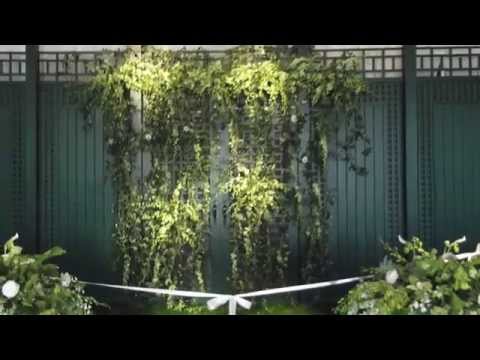
The ask
Develop a network of living-tree venues — cathedral-like structures grown from trained bamboo, jackfruit, or hardwood — across Bangladesh's rural belt, operating them as premium event spaces (weddings, corporate retreats) while the agroforestry system earns income from timber, fruit, and carbon credits year-round.
Why now
Premium experiential venues in Bangladesh are chronically undersupplied outside Dhaka; destination weddings and corporate offsites in distinctive natural settings command ৳3–8 lakh per day. The global wellness tourism market is growing at 10% per year; 'nature immersion' and 'biophilic design' are driving a new category of eco-resort that commands 2–3x the nightly rate of conventional hotels. Bamboo structures can be substantially form-complete within 3–5 years — faster than hardwood but with similar visual impact.
Why Bangladesh
Bangladesh's rapid urbanisation has created a professional class with disposable income and acute nature-deficit — both Dhaka and Chittagong have less than 3m² of green space per capita. The country has deep cultural traditions around gardens and nature that make living-tree aesthetics legible to local buyers. Bamboo is one of the fastest-growing biomass crops in the region; jackfruit and other native hardwoods can be trained into dramatic architectural forms within a decade. Land within 2–3 hours of Dhaka in Gazipur or Sylhet is still affordable for mixed-use agro-tourism development.
As a business
Revenue blends event-venue income (day rates, overnight accommodation, food and beverage), agro-tourism entry fees and immersive experiences (guided agroforestry tours, planting days, retreat packages), and passive revenue from timber offtake, fruit sales, and verified carbon sequestration credits as the canopy matures. The venue pays the bills in years 1–5 while the forest matures into a significant carbon and timber asset.
Economics
Move the sliders to model your own living-tree venue. Defaults are order-of-magnitude estimates — pressure-testing them is part of what a founder pitches us.
Model a living-tree agroforestry venue
Clears its setup cost after ~2.0 years, then profit (volt) from there. Hover or tap the chart for any month.
Illustrative model — defaults are order-of-magnitude estimates from public data, not a forecast. Pressure-test every number before you build.
What AimHuge would back
A founder with design sensibility and hospitality operations experience — not primarily an environmentalist. The living-forest aesthetic only converts to premium pricing if the venue experience is genuinely exceptional. AimHuge would back a proof-of-concept site over 1–2 ha before committing to a wider rollout.
Impact
A 5-hectare bamboo-and-hardwood agroforestry system sequesters approximately 25–35 tCO₂e per year in standing biomass, while the event-venue revenue stream makes land stewardship economically self-sustaining without clearing. Bamboo culm harvesting cycles of 3–5 years provide a renewable structural material that displaces steel and concrete in venue fit-outs — each tonne of bamboo replacing steel avoids roughly 1.8 tCO₂e in embodied carbon. The tourism income stream employs an estimated 8–15 people on-site year-round and keeps premium event spend within rural Bangladesh rather than flowing to imported resort destinations, contributing to foreign-exchange retention.
Also being built elsewhere
Companies proving the model in other markets.
Boutique eco-resort built entirely from bamboo and reclaimed wood; proves premium event and hospitality revenue from agroforestry-grown materials in a tropical context.
Productive agroforestry bamboo system with tissue-cultured genetics; demonstrates the commercial timber + sequestration model that underpins the living-venue concept.
More Regenerative Agriculture ideas
Other climate businesses we want built.