Idea Bank — Request for Climate Startups
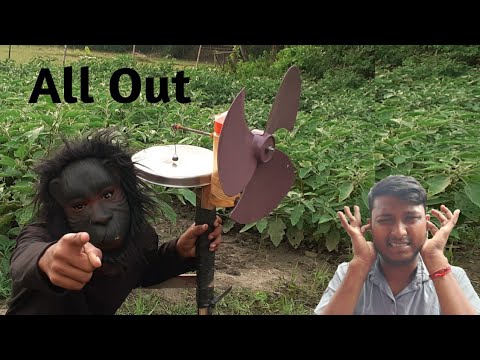
Kinetic Bird Deterrent Flaps
Wind-powered crop-protection flaps sold to BD smallholders as a chemical-free bird deterrent.
The ask
Manufacture and distribute low-cost kinetic wind-powered bird and crow deterrent flap systems for Bangladeshi smallholder farmers, replacing chemical scaring agents and labour-intensive manual deterrence with a passive, durable, zero-energy device.
Why now
Bird predation on rice, maize, and sunflower crops causes estimated losses of 5–15% in South Asian smallholder settings (FAO Bangladesh country assessment). Chemical repellents are banned or restricted under the 2018 Pesticide Ordinance amendments, and scare-gun use is being restricted near settlements. Reflective tape and manual scarecrows are the current default — both degrade within weeks and require constant replacement. A durable mechanical flap that runs on wind has a 3–5 year lifespan, creating a genuine product-market fit gap that low-cost injection moulding can now fill at under ৳300 per unit.
Why Bangladesh
Bangladesh's pre-harvest bird loss problem is concentrated in the boro rice season (March–June) and the sunflower belt of Rajshahi and Pabna. The country's 16 million smallholder plots represent a fragmented but enormous addressable market. Critically, Bangladesh's mature plastic moulding sector (the garment accessory supply chain feeds a large injection-moulding ecosystem in Dhaka and Gazipur) can produce the flap components at a cost that makes ৳250–350 retail pricing viable.
As a business
The company sells deterrent units through agricultural input dealers (the same channel as seeds and fertiliser) at ৳250–350 per unit, with farmers buying 10–30 units per acre. Gross margin at scale is 45–55% — low-complexity injection-moulded parts with no consumable. A second revenue line is institutional sales to BADC seed multiplication farms, BRRI trial stations, and government-managed crop land that needs large-scale coverage. Export to similar smallholder markets in Myanmar, Vietnam, and West Africa is a natural third phase.
Economics
Move the sliders to model your own bird deterrent business. Defaults are order-of-magnitude estimates — pressure-testing them is part of what a founder pitches us.
Model a kinetic bird deterrent business
Clears its setup cost after ~1 months, then profit (volt) from there. Hover or tap the chart for any month.
Illustrative model — defaults are order-of-magnitude estimates from public data, not a forecast. Pressure-test every number before you build.
What AimHuge would back
We want a founder who has already run a pilot with 50–100 farmers and measured actual crop-loss reduction. The distribution moat is critical — this product wins by getting into every agri-input dealer in a district, which requires feet-on-the-ground sales. We back someone who treats this as a consumer-goods distribution problem first and a manufacturing problem second.
Impact
Reducing pre-harvest bird losses by 5–10 percentage points across Bangladesh's boro rice season (11 million ha, two seasons) recovers an estimated 500,000–1,000,000 tonnes of rice annually — food that would otherwise be replanted on additional land, driving deforestation and associated CO₂e emissions (≈ 4–6 tonnes CO₂e per ha of new clearance). Each unit sold displaces chemical scaring agents (banned or restricted under the 2018 Pesticide Ordinance) and eliminates the labour cost of manual deterrence (estimated ৳400–800/week per farm during peak season). At 20,000 units per month reaching roughly 600–2,000 ha of coverage, the product removes an estimated 1,200–4,000 tonnes of pesticide-equivalent chemical input from Bangladesh's farmland annually.
Also being built elsewhere
Companies proving the model in other markets.
Wind-powered kinetic visual deterrent for agricultural bird control; nearest product analogue to the Bangladesh flap system — proves willingness to pay for passive mechanical deterrence.
35-year-old crop bird deterrent company with global distribution; validates the market size and export potential for crop-protection bird-control devices.
More Regenerative Agriculture ideas
Other climate businesses we want built.