Idea Bank — Request for Climate Startups
Indoor Vertical Strawberry Farming
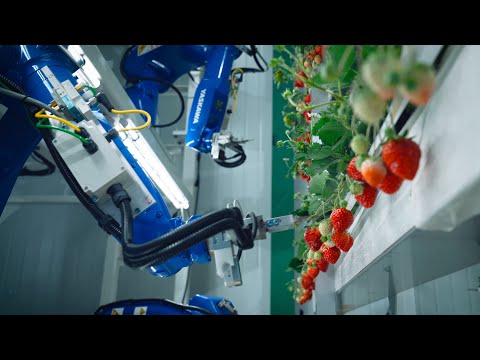
Climate-controlled vertical strawberry production for BD's premium urban grocery market.
The ask
Build a climate-controlled indoor vertical farm producing strawberries for Dhaka and Chattogram's premium retail and hospitality market, directly displacing expensive cold-chain imports from Egypt and India while achieving year-round supply that open-field production in Bangladesh cannot.
Why now
The Philippine InteliFarm operation proved that tropical-climate indoor strawberry cultivation is commercially viable at small scale — a direct template. LED grow-light costs have dropped 70% since 2019; hydroponic NFT systems for strawberries are now available as turnkey kits from Chinese manufacturers for under USD 15,000 per 1,000 sq ft. Bangladesh's own Rajshahi and Chittagong Hill Tracts produce open-field strawberries in winter, but supply collapses from March to November — the nine-month window indoor farming would own.
Why Bangladesh
Strawberries retail in Dhaka supermarkets (Shwapno, Meena Bazar, Unimart) at ৳800–1,500/kg in season, and at ৳2,000+ or simply absent in off-season. Hotel F&B managers and cake shop owners — who need consistent supply — are the natural first customers. Electricity is cheap enough in EPZ-adjacent industrial estates to make climate control affordable; Bangladesh Power Development Board offers preferential rates to agri-processing units. Import substitution framing also opens access to government incentive schemes for agro-processing.
As a business
Revenue comes from direct sales to premium supermarkets, five-star hotel chains (InterContinental, Radisson, Westin — all in Dhaka), and specialty confectionery businesses. A 5,000 sq ft farm producing 4 kg/m² per cycle (three cycles per year) generates roughly 55 tonnes annually. At a blended wholesale price of ৳900/kg, that is ৳5 crore in annual revenue from a single site. The model scales by adding grow rooms; the controlling asset is the climate system and the customer relationships, not the land.
Economics
Move the sliders to model your own vertical strawberry farm. Defaults are order-of-magnitude estimates — pressure-testing them is part of what a founder pitches us.
Model an indoor strawberry farm
Does not break even within 5 years at these inputs — adjust the sliders. Hover or tap the chart for any month.
Illustrative model — defaults are order-of-magnitude estimates from public data, not a forecast. Pressure-test every number before you build.
What AimHuge would back
We want a founder who has run a hydroponic or controlled-environment agriculture operation before — the failure modes are agronomic (disease, humidity control), not commercial. The right team has a wholesale supply agreement with at least two Dhaka supermarket chains or a hotel group before raising growth capital. We are backing the second farm, not the experiment.
Impact
At Bangladesh scale, a network of 5,000 m² indoor strawberry farms displaces roughly 275 tonnes of imported strawberries per year — eliminating the cold-chain emissions from air freight from Egypt and India (≈ 8 kg CO₂e per kg of air-freighted fruit). The year-round supply breaks the nine-month domestic shortage window that currently forces premium buyers to pay import prices, keeping hard currency in-country. Each commercial farm site employs 10–15 workers full-time, with a multiplier into packaging, logistics, and retail. Energy consumption is real but comes predominantly from Bangladesh's growing renewables mix; switching to on-site solar cuts the carbon footprint further.
Also being built elsewhere
Companies proving the model in other markets.
More Regenerative Agriculture ideas
Other climate businesses we want built.