Idea Bank — Request for Climate Startups
Farm Map
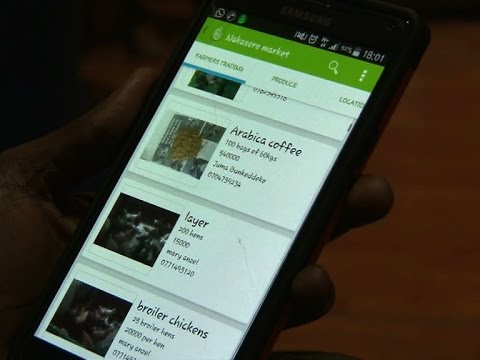
A digital directory linking Bangladesh's smallholder farms directly to buyers.
The ask
Build a searchable, verified digital map of Bangladeshi farms — crops, certifications, minimum order, contact — so wholesalers, restaurants, and exporters can source directly without a chain of intermediaries.
Why now
Smartphone penetration among rural BD farmers crossed 60 % in 2023 and mobile data costs have collapsed; farmers can now self-list without an agent. Nationwide digitisation of Union Parishad land records (2022–2025) gives a verifiable geo layer to anchor profiles. The government's Agro-Processing Zone programme is creating a new class of buyers who need traceable sourcing at scale.
Why Bangladesh
BD has roughly 16 million farming households, the vast majority operating under two hectares. The current supply chain extracts 40–60 % of farm-gate value through three to five intermediary tiers. Cold-chain investment is surging (Akij, Pran, BRAC Dairy all expanding) but sourcing remains opaque — buyers can't find farmers, farmers can't find buyers. A verified map collapses that search cost.
As a business
Revenue comes from a tiered SaaS subscription for commercial buyers (small wholesalers ৳500/month, exporters and processors ৳3,000–8,000/month) and a small lead-gen fee per verified transaction. Farmers list free. Margin is almost entirely gross margin once the directory is seeded; the defensible moat is data freshness and verification, which a field-agent network (paid per verified visit) maintains.
Economics
Move the sliders to model your own Farm Map business. Defaults are order-of-magnitude estimates — pressure-testing them is part of what a founder pitches us.
Model a farm-directory SaaS
Clears its setup cost after ~2.9 years, then profit (volt) from there. Hover or tap the chart for any month.
Illustrative model — defaults are order-of-magnitude estimates from public data, not a forecast. Pressure-test every number before you build.
What AimHuge would back
We want a founder with deep agri-supply-chain relationships — someone who has already sold to processors or worked in FMCG sourcing — paired with a lightweight tech co-founder. The first 500 verified farm profiles are the hardest part; we'd back a team that can show a credible field-agent model for getting there in year one.
Impact
Eliminating two to three intermediary tiers from Bangladesh's farm supply chain could keep an additional 20–30% of the farm-gate value with producers — at 16 million farming households, even a 5% market penetration represents a structural shift. Shorter, verified supply chains reduce food waste from over-ordering and mis-specification (Bangladesh loses an estimated 30–40% of vegetables post-harvest partly due to chain opacity). The platform data layer enables precision input recommendations that cut excess fertiliser and pesticide use — Bangladesh currently applies 3× recommended pesticide doses due to imprecise advisory. Reduced synthetic input use directly cuts N₂O and runoff emissions.
Also being built elsewhere
Companies proving the model in other markets.
Online mandi connecting farmers directly to retailers, eliminating middlemen; similar buyer-pays, farmer-lists-free model targeting the South Asian smallholder supply chain.
Digital farm directory connecting farmers, cooperatives, buyers, and banks; farmers commanding 20% price premiums post-adoption — validates the value-creation thesis.
More Regenerative Agriculture ideas
Other climate businesses we want built.