Idea Bank — Request for Climate Startups
Eco-Tourism Wildlife Tours
Conservation-linked wildlife tours that channel tour revenue directly into habitat protection.
The ask
Launch a premium wildlife eco-tourism operator focused on Bangladesh's under-visited natural assets — the Sundarbans, Lawachara rainforest, Hakaluki haor wetlands — that sells to domestic middle-class travellers and the South Asian diaspora, and legally channels a fixed percentage of revenue into local conservation activities.
Why now
Domestic tourism in Bangladesh doubled in visitor numbers between 2015 and 2023, and the post-pandemic rebound has created a new segment of urban professionals willing to pay ৳15,000–40,000 per person for a well-packaged 2–3 night nature experience. Bangladesh's national parks have received virtually no private-sector investment in interpretation, guiding quality, or accommodation — the gap between what exists and what an international-standard operator would offer is enormous, which means a well-run operator can dominate the premium tier quickly. The Sundarbans remains one of the world's least-commercialised UNESCO World Heritage sites.
Why Bangladesh
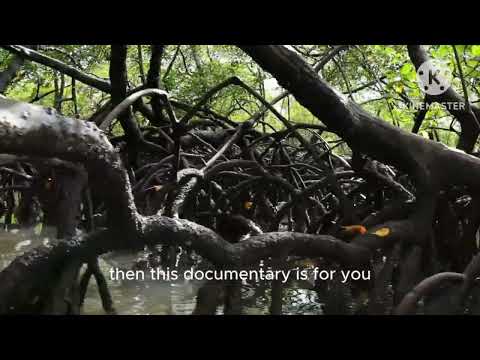
Bangladesh has extraordinary biodiversity in a tiny area: the world's largest mangrove forest, 650+ bird species, Irrawaddy dolphins, and the last Bengal tiger habitat. Lawachara has gibbons visible most mornings. None of this is effectively marketed. There is no operator currently running fixed-departure small-group wildlife tours with trained naturalist guides, quality accommodation, and transparent conservation contributions — the space is entirely occupied by unguided mass-transit day trips. The conservation link differentiates the product and taps into CSR spending by Bangladeshi corporations for team retreats.
As a business
Revenue comes from tour fees (small-group fixed departures, 6–12 people per trip), corporate retreat packages, and photography tour premiums. A 10–15% conservation contribution goes to a named partner (a forest department joint venture or an NGO like WCS Bangladesh) and is stated on every invoice — this is a legal commitment that builds trust with diaspora and international bookers. Fixed costs are low: the operator manages guides and booking; accommodation is leased from existing lodges under a quality-agreement contract rather than owned.
Economics
Move the sliders to model your own wildlife eco-tourism operation. Defaults are order-of-magnitude estimates — pressure-testing them is part of what a founder pitches us.
Model a wildlife eco-tourism operator
Clears its setup cost after ~7 months, then profit (volt) from there. Hover or tap the chart for any month.
Illustrative model — defaults are order-of-magnitude estimates from public data, not a forecast. Pressure-test every number before you build.
What AimHuge would back
We want a founder who is personally passionate about Bangladesh's wildlife and has existing relationships with forest department officers, lodge owners, or conservation NGOs — not someone trying to enter eco-tourism from an MBA playbook. Operational credibility is built on guiding quality; the founder should be a trained naturalist or have one as a co-founder. We are especially interested in a model that creates verifiable conservation outcomes — camera-trap data, reforestation acres, ranger employment — that can be reported annually to attract impact investors and corporate buyers.
Impact
A premium wildlife eco-tour operator that legally channels 5–10 % of revenue into conservation activities provides the Sundarbans and Lawachara habitats with a private funding stream that is structurally self-reinforcing: the better the wildlife, the higher the premium the operator can charge. At 80 trips per year with 8 passengers each, the operation keeps roughly US$140,000 in domestic tourism revenue that would otherwise leave Bangladesh for Thailand or Sri Lanka, employing an estimated 12–16 local guides and boat operators in full-time-equivalent roles. Wildlife tourism in analogous Indian reserves generates 45 % local economic multiplier effects, suggesting significant secondary employment in lodges, food, and transport.
Also being built elsewhere
Companies proving the model in other markets.
Certifies and promotes wildlife tourism operators that channel revenue into tiger conservation; ₹166 crore total revenue across 4 reserves with 45% local economic multiplier — the proof-of-concept for the Bangladesh model.
Community-led eco-tourism in the Sundarbans mangrove; demonstrates local operator capability and conservation-revenue link in the exact target geography.
More Regenerative Agriculture ideas
Other climate businesses we want built.