Idea Bank — Request for Climate Startups
Coppicing & Forest Regeneration Service
Sell managed coppicing programs to landowners to accelerate forest regrowth and unlock timber and carbon income.
The ask
Offer a paid forest management service to landowners on degraded hillside and floodplain plots: implement proven coppicing and selective pruning regimes that accelerate native forest regrowth, then monetise timber harvests and voluntary carbon credits on the landowner's behalf in exchange for a management fee and revenue share.
Why now
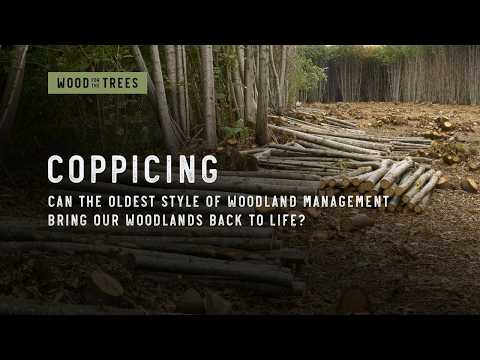
Controlled coppicing — cutting woody stems at the base to stimulate multi-stem regrowth — has been documented since medieval Europe and is now backed by modern silviculture research as the fastest, lowest-cost path to biomass recovery on degraded land. Bangladesh's Social Forestry rules (2004, amended 2018) explicitly permit community and private forest management with commercial harvest rights. The global market for high-integrity land-use carbon credits is growing 30%+ per year; small degraded plots previously too fragmented to certify are now aggregatable under grouped-project methodologies.
Why Bangladesh
Bangladesh has ~2.6 million hectares of officially classified degraded forest land — largely the Chittagong Hill Tracts and the Madhupur Sal forest belt — carrying sparse vegetation that could be quadrupled in biomass within 8–10 years under managed coppicing. Rural landowners on these plots earn almost nothing today; a revenue-share timber and carbon model converts idle land into income. Demand for certified domestic timber is growing as construction expands and import costs rise.
As a business
The service company charges landowners an upfront site assessment fee (৳15,000–30,000) and an annual management retainer (৳8,000–20,000/ha). It earns a 20–30% revenue share on timber sales and carbon credit proceeds. Carbon credits (REDD+ afforestation/reforestation methodology) typically begin generating after year three. The business scales by aggregating many small plots under a single grouped-project carbon certification, amortising the ~$50,000 verification cost across the whole portfolio.
Economics
Move the sliders to model your own coppicing service business. Defaults are order-of-magnitude estimates — pressure-testing them is part of what a founder pitches us.
Model a forest regeneration service
Clears its setup cost after ~19 months, then profit (volt) from there. Hover or tap the chart for any month.
Illustrative model — defaults are order-of-magnitude estimates from public data, not a forecast. Pressure-test every number before you build.
What AimHuge would back
A founder with a forestry or agronomy background who has already run a pilot plot and can show above-baseline biomass recovery data. The key hire is a carbon methodology specialist; without credible MRV (monitoring, reporting, verification), the carbon credit stream — which is where the unit economics really work — cannot be unlocked. We are looking for the aggregator, not the single-plot operator.
Impact
Coppiced native woodland in the Chittagong Hill Tracts sequesters roughly 4–6 tCO₂e/ha/yr during the active regrowth phase — two to three times the rate of degraded land left unmanaged. At 300 ha under management, the operation avoids an estimated 1,500 tonnes CO₂e per year while generating 8–12 jobs in field teams and timber handling that keep rural income local rather than lost to charcoal extraction. Each hectare of restored coppice forest also reduces topsoil erosion by 60–80 %, protecting downstream agricultural land from siltation — a co-benefit that reduces future adaptation costs for Bangladesh's food system.
Also being built elsewhere
Companies proving the model in other markets.
Regenerates degraded land at scale for carbon removal and biodiversity; paid-management-fee model very close to the service model proposed here.
End-to-end nature restoration and reforestation company; EU SUPERB consortium partner; proves investor appetite for managed forest-carbon services.
More Regenerative Agriculture ideas
Other climate businesses we want built.