Idea Bank — Request for Climate Startups
Air-Pruning Tree Nursery
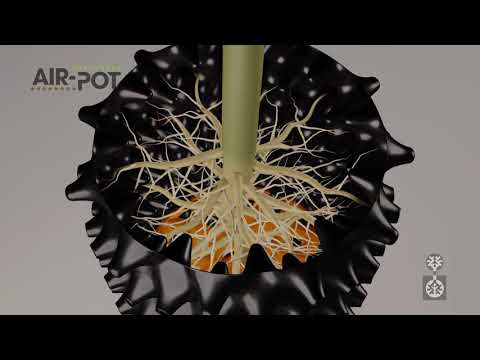
Produce healthier, faster-establishing tree seedlings using air-pruning containers for reforestation and agroforestry.
The ask
Establish a commercial tree nursery in Bangladesh using air-pruning container technology — fabric or slotted hard-wall pots that naturally terminate circling roots — to supply high-quality seedlings to reforestation drives, agroforestry programmes, and urban greening projects at a meaningful margin over conventional nursery stock.
Why now
Bangladesh's Social Forestry programme and several large NGO reforestation drives have poor survival rates — often below 50% — because seedlings from conventional nurseries have deformed, circling root systems that never establish properly. Air-pruning containers, proven in Southeast Asian and Australian nurseries, raise post-planting survival rates to 85–90%. The containers themselves cost ৳30–80 each and are reusable for five or more cycles. Government and donor willingness to pay for higher-specification seedlings is rising as project evaluators start tracking survival metrics.
Why Bangladesh
The government planted 60 million trees in 2023 under various greening mandates; survival rates are a known embarrassment. BRAC, the Mangrove Restoration Project, and the Haor Basin reforestation programme all need reliable seedling supply. Bangladesh's humid climate makes root disease in conventional poly bags a chronic problem — air-pruning prevents the waterlogged root zone that causes it. Local jute-fibre biodegradable air-pruning pots are a natural product extension: a Bangladeshi supplier making them would have a global niche.
As a business
Revenue is per-seedling sales to government forest departments, NGOs, and private agroforestry buyers at ৳25–80 per seedling depending on species and age — a 2–3x premium over conventional poly-bag stock. Volume contracts with the Forest Department or large NGOs provide revenue predictability. A secondary line is selling or licencing the air-pruning container design to smaller nurseries across the country.
Economics
Move the sliders to model your own air-pruning nursery. Defaults are order-of-magnitude estimates — pressure-testing them is part of what a founder pitches us.
Model an air-pruning tree nursery
Does not break even within 5 years at these inputs — adjust the sliders. Hover or tap the chart for any month.
Illustrative model — defaults are order-of-magnitude estimates from public data, not a forecast. Pressure-test every number before you build.
What AimHuge would back
A nursery operator who has already produced air-pruning stock at any scale and can show transplant survival data, plus at least one government or NGO buyer willing to pay the quality premium. Bonus points for a founder who has worked in Bangladesh's forest or agroforestry sector and understands the government procurement cycle.
Impact
Raising post-planting survival rates from the current ~50% to 85–90% effectively halves the number of seedlings (and the diesel, fertiliser, and land) needed to achieve any reforestation target — cutting the embedded carbon cost of Bangladesh's 60-million-tree annual planting programme by an estimated 30–40%. Each surviving tree sequesters 10–20 kg CO₂e per year over its lifetime; at the government's planting rate, improving survival doubles the net carbon removal without planting a single extra tree. Air-pruning nurseries also unlock the jute-fibre biodegradable pot market, substituting petroleum-based polybags and creating a new export product. Improved forest cover in haor and coastal buffer zones supports biodiversity and reduces flood damage costs.
Also being built elsewhere
Companies proving the model in other markets.
Global supplier of commercial air-pruning propagation trays and containers to forestry and nursery industries; product design benchmark for a Bangladesh manufacturer.
Produces 360-degree air-pruning nursery containers used in large-scale reforestation; technical model for the container product a Bangladesh nursery would use or manufacture.
More Regenerative Agriculture ideas
Other climate businesses we want built.