Idea Bank — Request for Climate Startups
Aeroponic Potatoes
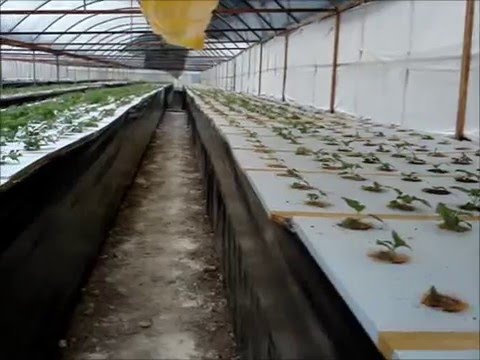
Grow potatoes in aeroponic mist systems using 90% less water and no soil, enabling high-yield tuber production.
The ask
Commercialise aeroponic potato seed production in Bangladesh — growing certified mini-tubers in misted, soilless chambers — to supply clean planting material to the country's large but disease-riddled smallholder potato sector.
Why now
Bangladesh produces over 10 million tonnes of potatoes per year, but yield gaps from virus-infected seed stock cost farmers an estimated 20–30% in productivity. The International Potato Center (CIP) has proven aeroponic seed systems in Asia and Latin America; hardware costs have dropped enough that a commercial-scale Bangladesh pilot is now viable for under $200 k. A government seed certification mandate is also under discussion, which would drive institutional demand for clean seed.
Why Bangladesh
Bangladesh is the world's seventh-largest potato producer, with over 500,000 ha under cultivation. Almost all seed is farmer-saved and progressively contaminated by viral degeneration. Clean aeroponic mini-tubers, multiplied through conventional field generations, can reset an entire supply chain. Flood-prone chars and peri-urban zones where soil quality is poor are ideal deployment sites for soilless aeroponic units — the system requires no arable land at all.
As a business
Revenue comes from selling certified aeroponic mini-tubers to seed multipliers and the government's Department of Agricultural Extension at a significant premium over conventional seed. A mini-tuber trades at ৳8–15 each versus ৳3–5 for conventional seed — the clean-health premium is well established. A second product line is consulting and leasing the aeroponic chambers to district seed farms wanting to set up their own certified multiplication programmes.
Economics
Move the sliders to model your own aeroponic seed potato operation. Defaults are order-of-magnitude estimates — pressure-testing them is part of what a founder pitches us.
Model an aeroponic potato seed facility
Does not break even within 5 years at these inputs — adjust the sliders. Hover or tap the chart for any month.
Illustrative model — defaults are order-of-magnitude estimates from public data, not a forecast. Pressure-test every number before you build.
What AimHuge would back
A founder with an agronomy or plant science background who has already grown even a small aeroponic batch and has a first commercial buyer identified — ideally a seed multiplier cooperative or the Bangladesh Agricultural Development Corporation. We want the technical founder, not an integrator importing a turnkey kit.
Impact
Cleaning Bangladesh's seed potato supply chain could recover 20–30% of the 2–3 million tonnes of yield currently lost to viral degeneration — roughly 400,000–900,000 tonnes of additional potatoes per year from the same land without additional fertiliser or irrigation inputs, saving an estimated 300,000 tonnes of CO₂e in avoided deforestation and land expansion. Each aeroponic facility requires no arable soil, making it deployable on char and peri-urban land that would otherwise be unproductive. Import substitution of certified seed potato material (currently partly imported) saves foreign exchange. Scaling clean seed through the multiplication chain supports the entire 500,000-ha potato sector.
Also being built elsewhere
Companies proving the model in other markets.
Targeting 25 million mini-tubers per year using aeroponics in South Asia; closest comparable to a Bangladesh operation with similar climate and potato sector context.
Uses AI-assisted aeroponics to produce 50× more seed potatoes per square metre than conventional methods; licensable model that a Bangladesh plant could adopt.
Commercial aeroponic seed potato company with proven deployment in hot climates; provides climate-analogue validation.
More Regenerative Agriculture ideas
Other climate businesses we want built.