Idea Bank — Request for Climate Startups
Waste-to-Energy Park
Municipal waste facility that doubles as public green space and climate education hub.
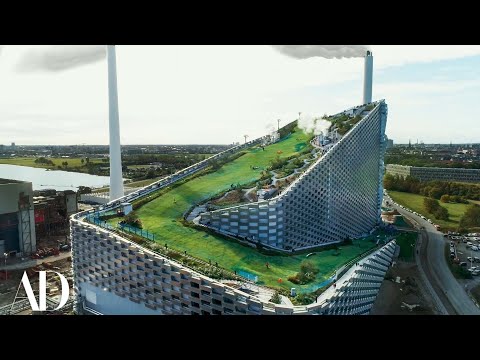
The ask
Develop a public-private waste-to-energy plant in a major Bangladeshi city — Dhaka, Chittagong, or Sylhet — that converts 500–1,000 tonnes per day of municipal solid waste into grid electricity, while embedding public amenity (park, sports facility, education centre) into the building to build community acceptance and political will.
Why now
Copenhagen's Amager Bakke plant — a waste-to-energy facility with a rooftop ski slope, climbing wall, and public hiking trail — has become the global proof point that heavy industrial infrastructure can be politically loved rather than opposed. Bangladesh's government has been publicly committed to closing Dhaka's Matuail and Aminbazar open dump sites since 2020 under ADB pressure; the country generates 14,000 tonnes of municipal waste daily with less than 10% treated. IFC and Asian Development Bank have active pipeline interest in Dhaka waste infrastructure. The moment for a credible private-sector bid is now.
Why Bangladesh
Dhaka produces roughly 6,500 tonnes of MSW per day with a calorific value sufficient for grate-fired combustion after minimal sorting. The city pays ৳1,200–1,800 per tonne to dispose of waste — a tipping fee that makes the feedstock effectively free and revenue-positive. Land near Dhaka's two major dump sites is already set aside for treatment infrastructure. BPDB's small-power-purchase framework allows private generators below 50 MW to sign 15-year PPAs; a 1,000 TPD plant generates roughly 30 MW. The public amenity angle solves the political NIMBY problem that has stalled previous waste-to-energy proposals in Dhaka.
As a business
Revenue comes from three streams: tipping fees paid by city corporations (৳1,200–1,800/tonne), power sales under a BPDB PPA (৳9–11 per kWh), and recyclable material sales (ferrous metals, glass, aggregate). The amenity component — park, track, pavilion — is municipally funded as part of the concession agreement, reducing private capex. This is a concession model: the operator takes a 20–25 year agreement with DCC or CDCC, recovers capex over the first 10 years, and runs at high margin for the remainder.
Economics
Move the sliders to model your own waste-to-energy park. Defaults are order-of-magnitude estimates — pressure-testing them is part of what a founder pitches us.
Model a waste-to-energy park
Does not break even within 5 years at these inputs — adjust the sliders. Hover or tap the chart for any month.
Illustrative model — defaults are order-of-magnitude estimates from public data, not a forecast. Pressure-test every number before you build.
What AimHuge would back
This is a concession business, not a startup — we want a consortium founder: an experienced infrastructure developer or project finance professional with existing relationships at DNCC/DSCC or a city corporation, partnered with a technology licensor (grate combustion or gasification). The AimHuge interest is in the policy-shaping and deal-origination phase; we would consider a pre-development advisory stake in exchange for introductions and BD-specific structuring help, ahead of formal project finance.
Impact
A 600 TPD plant converting municipal solid waste to electricity avoids approximately 165,000 tCO₂e/yr: 120,000 tCO₂e from displaced open-dump methane (Bangladesh MSW has 74% organic content) and ~45,000 tCO₂e from 18 MW of coal-displaced grid power. At scale, closing Dhaka's Matuail dump eliminates one of the city's top air-pollution sources, providing measurable health co-benefits for 2+ million nearby residents. The tipping-fee revenue model also keeps roughly $9 million/yr in municipal waste-management budget from flowing into unmanaged landfill costs — a hard-currency efficiency gain for a cash-constrained city authority.
Also being built elsewhere
Companies proving the model in other markets.
The $670M Copenhagen WtE plant with ski slope and public park — the world's flagship proof that waste-to-energy infrastructure can be a politically loved public amenity.
Leading WtE EPC contractor active in developing-country markets including China, India, and Southeast Asia — likely technology partner for a Dhaka WtE project.
Largest WtE operator in Asia; has built 80+ plants across China and is active in Vietnam and other Belt-and-Road markets — a realistic joint-venture partner for BD.
More Clean Energy ideas
Other climate businesses we want built.