Idea Bank — Request for Climate Startups
Lightweight Flexible Solar Panels
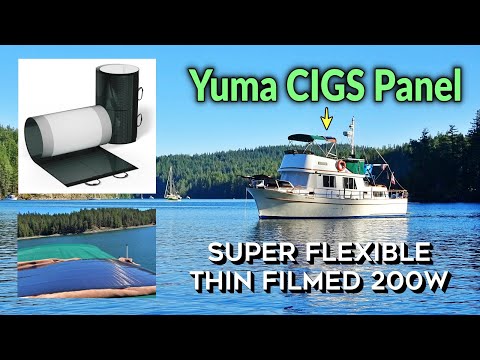
Flexible solar film enabling rooftop and river-fleet electrification without structural reinforcement.
The ask
Build a distribution and light-assembly business bringing lightweight flexible solar panels (CIGS or perovskite-on-film) into Bangladesh's tin-roof residential market and its 100,000-vessel river transport fleet, offering turnkey installation that conventional rigid panels cannot serve.
Why now
Flexible thin-film solar panels have crossed a commercial threshold: CIGS modules from Chinese manufacturers (Solarmer, Hanergy-derived OEMs) now deliver 12–16% efficiency at weights below 3 kg/m², compared to 10–12 kg/m² for glass-frame rigid panels. The IEA's 2024 PV market report notes that flexible modules are the fastest-growing segment in off-grid applications. In Bangladesh, the rigid-panel installation base has saturated the structurally sound concrete rooftop segment — the remaining market is the 60% of homes with corrugated tin roofs that cannot bear the load.
Why Bangladesh
Bangladesh has approximately 30 million tin-roofed households — the single largest addressable segment for flexible solar globally. IDCOL's solar home system program has deployed 6 million rigid-panel SHS units; the next 10 million units face the tin-roof structural constraint. On the water, Bangladesh's river fleet is almost entirely diesel-powered; boat operators on Sadarghat routes spend ৳3,000–8,000/month on diesel for lighting and electronics. A flexible panel glued to a curved boat roof with no drilling or framing requirement is a genuinely new product.
As a business
The company earns on panel import and assembly margin (25–35%), plus installation service fees and a financing product structured through partner MFIs for the ৳15,000–40,000 per-household system cost. The river fleet is a faster-converting B2B market: boat operators have a measurable diesel cost they want to cut, and a single boat-yard that services 500 vessels becomes a distribution anchor. Carbon credit revenue (IDCOL-registered, Gold Standard) adds ৳500–1,500 per system over five years.
Economics
Move the sliders to model your own flexible solar distribution business. Defaults are order-of-magnitude estimates — pressure-testing them is part of what a founder pitches us.
Model a flexible solar panel distribution business
Clears its setup cost after ~1 months, then profit (volt) from there. Hover or tap the chart for any month.
Illustrative model — defaults are order-of-magnitude estimates from public data, not a forecast. Pressure-test every number before you build.
What AimHuge would back
We want a founder who has completed a 50-installation pilot across both tin-roof homes and river vessels and has IDCOL recognition for the panel technology. The right team brings an import and compliance track record (Bangladesh Energy Regulatory Commission type approval is non-trivial) and an MFI partnership for consumer financing. We are backing the distribution and financing layer, not a panel manufacturer.
Impact
At 300 systems per month (3 600 per year), the default deployment installs roughly 3 600 × 250 W = 900 kWp of new solar capacity, generating an estimated 1 400 MWh/year and displacing approximately 1 000 tCO₂e annually from kerosene lamps, diesel generators, and grid coal. Bangladesh's 100 000-vessel river fleet, currently diesel-dependent, represents the largest single addressable segment — electrifying even 5% of working boats would create a transformative emission and fuel-import reduction. Each household or vessel installation saves an estimated USD 60–100/year in fuel spending, cumulatively retaining millions of dollars of foreign exchange annually as the fleet scales.
Also being built elsewhere
Companies proving the model in other markets.
Listed manufacturer of CIGS thin-film flexible panels at 2 mm / 3 kg/m²; supplied Bangladesh's first thin-film roof project and expanding in Asia.
Bangladesh's dominant solar distributor with national reach; demonstrates that local distribution + installation service is the competitive moat, not panel manufacturing.
More Clean Energy ideas
Other climate businesses we want built.