Idea Bank — Request for Climate Startups
Low-Wind Turbines
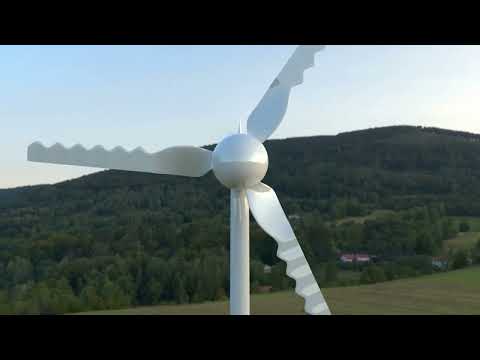
Wind turbines designed for Bangladesh's low-speed coastal and delta winds.
The ask
Manufacture or assemble small-to-medium wind turbines with cut-in speeds below 2.5 m/s — suited to Bangladesh's coastal belt and offshore chars — and sell them as hybrid add-ons to diesel mini-grids or solar installations.
Why now
Conventional turbines require 3–4 m/s to start generating; Bangladesh's coastal average is 3.5–5 m/s at hub height, but with high variance — standard units spend too many hours stalled. New permanent-magnet alternator designs with higher pole counts cut in below 2 m/s. Bangladesh's RE policy now allows private mini-grid operators to add wind, and rural electrification agencies are actively seeking technologies that reduce diesel consumption in islands and chars.
Why Bangladesh
Bangladesh has 710 km of coastline and hundreds of offshore chars where diesel logistics cost ৳40–80/kWh compared to ৳10–12/kWh from a wind-solar hybrid. The delta wind resource is consistent enough for small turbines to generate 1,500–2,000 kWh/yr per kW of capacity. Local steel fabrication capacity is ample and cheap — towers and nacelle frames can be made in-country. BPDB and IDCOL already have framework agreements for off-grid RE procurement.
As a business
Revenue comes from turbine sales to mini-grid operators (B2B), fisherfolk cooperatives, shrimp farm operators, and RE developers. A service + monitoring contract on top of hardware sales adds recurring revenue. Margin is concentrated in the alternator and blade IP; the tower and balance-of-system can be locally sourced. A 3 kW unit priced at ৳3.5–4.5 lakh competes directly against a diesel genset that costs ৳1.5 lakh but burns ৳2–3 lakh of fuel per year.
Economics
Move the sliders to model your own low-wind turbine deployment. Defaults are order-of-magnitude estimates — pressure-testing them is part of what a founder pitches us.
Model a low-wind turbine business
Clears its setup cost after ~3.1 years, then profit (volt) from there. Hover or tap the chart for any month.
Illustrative model — defaults are order-of-magnitude estimates from public data, not a forecast. Pressure-test every number before you build.
What AimHuge would back
An engineering-led team with a working prototype that has been tested in Bangladeshi coastal conditions — not specs on paper. We want to see at least one Letter of Intent from a mini-grid operator or IDCOL. Hardware businesses at this scale need a local manufacturing partner lined up before we write a cheque.
Impact
A single 3 kW turbine operating at Bangladesh's coastal average of 4 m/s generates roughly 4 000–5 000 kWh/year, displacing approximately 3 tCO₂e of coal-fired grid power annually. At 60 turbines sold per year at default scale, the annual avoided emissions reach 180 tCO₂e — meaningful for a coastal mini-grid market where diesel fuel costs USD 0.80–1.00/litre and each turbine displaces 600–800 litres per year. Coastal char islands, home to over two million Bangladeshis, currently rely entirely on diesel for any electricity; a bankable low-wind product unlocks an energy-access market with zero grid alternatives and saves an estimated USD 300 000/year in diesel imports across the default sales volume.
Also being built elsewhere
Companies proving the model in other markets.
World's top-selling small wind brand for 40+ years; Excel 10/15 turbines in off-grid and rural-electrification deployments across 90+ countries.
Modular small turbines targeting agricultural and remote community electrification, demonstrating robust unit economics in low-wind coastal environments.
More Clean Energy ideas
Other climate businesses we want built.