Idea Bank — Request for Climate Startups
Scrap-Metal Micro-Hydro
Fabricate low-head micro-hydro turbines from local scrap metal for irrigation canals and river channels.
The ask
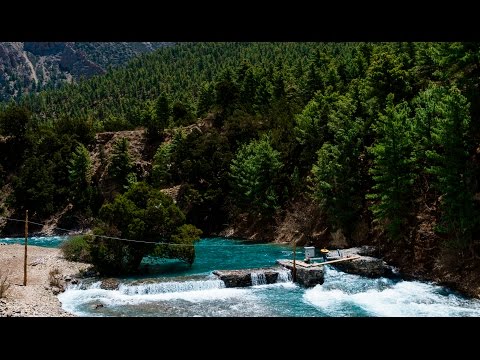
Fabricate low-cost, low-head (1–5 m) micro-hydro turbines from locally sourced scrap metal — primarily propeller-type and cross-flow designs — for installation on irrigation canals, drainage sluices, and small river channels in Bangladesh's hilly northern and eastern districts, providing cheap baseload generation where solar is intermittent.
Why now
The low-head micro-hydro design space has been well documented by ITDG/Practical Action — fabrication blueprints for sub-5 kW units exist in the public domain and have been adapted for sub-Saharan Africa and Nepal at near-scrap-metal cost. Bangladesh's canal and drainage infrastructure, built for flood control and irrigation, contains thousands of head differentials of 1–3 m that are never harvested. Off-grid energy demand in the Chittagong Hill Tracts and Sylhet region is unmet by both grid and solar — these are forested, shaded terrain where solar underperforms.
Why Bangladesh
The Chittagong Hill Tracts and Sylhet division have hundreds of small streams and canal systems with measurable hydraulic head; BWDB (Bangladesh Water Development Board) surveys have identified over 400 candidate sites for small hydro below 100 kW. Scrap metal is abundant and cheap in Bangladesh — the ship-breaking yards of Sitakund supply structural steel at a fraction of new-material cost. Local metal fabrication capacity (welding, lathe turning) is strong in small industrial towns like Comilla, Sylhet, and Rangamati, reducing import dependency for turbine components.
As a business
A turbine fabricated from scrap metal and installed at ৳2–5 lakh for a 1–5 kW unit is priced well below any imported equivalent ($8,000–25,000 for comparable imported units). Revenue comes from direct turbine sales to rural electrification co-ops, NGOs, and private landowners, plus a service contract for annual inspection and bearing replacement at ৳20–40K/year. A portfolio of 10–15 installed units generates steady service revenue while the fabrication business scales. Carbon credits from displaced diesel generation (rural generators emit ~0.9 kgCO₂/kWh) add ৳3–7/kWh in verifiable offset value.
Economics
Move the sliders to model a scrap-metal micro-hydro fabrication business. Defaults are order-of-magnitude estimates — pressure-testing them is part of what a founder pitches us.
Model a scrap-metal micro-hydro business
Does not break even within 5 years at these inputs — adjust the sliders. Hover or tap the chart for any month.
Illustrative model — defaults are order-of-magnitude estimates from public data, not a forecast. Pressure-test every number before you build.
What AimHuge would back
A founder with a mechanical engineering or metal fabrication background who has installed at least one working turbine on a real canal or stream in Bangladesh and can show generation data over a monsoon cycle. We would prioritise a team that has a relationship with BWDB or an NGO with access to surveyed candidate sites — site origination is as hard as fabrication in this business.
Impact
A single low-head micro-hydro unit generating 5 kW continuous baseload produces ~43,800 kWh/yr, displacing diesel generation at 0.85 kgCO₂e/kWh — roughly 37 tCO₂e per installed unit per year. An annual deployment of 30 units adds ~1,110 tCO₂e/yr of avoidance; as the installed base grows to 60 units, annual savings exceed 2,200 tCO₂e. Diesel displacement is the dominant FX impact: at $0.08/kWh, each unit saves ~$3,500 in imported fuel per year — $210,000/yr across a 60-unit fleet. Off-grid communities in the Chittagong Hill Tracts and Sylhet haor regions also see direct income and air-quality co-benefits.
Also being built elsewhere
Companies proving the model in other markets.
Belgian company making low-head vortex turbines (15–70 kW) for canals and rivers in rural areas — close analog to the low-head canal turbine business in Bangladesh.
NGO/social enterprise that has deployed fabricated micro-hydro across Nepal using local metal shops — proves the scrap-metal fabrication model at village scale.
More Clean Energy ideas
Other climate businesses we want built.