Idea Bank — Request for Climate Startups
Saltwater Galvanic Lamps
Distribute galvanic saltwater lamps as no-battery off-grid lighting for Bangladesh's char islands.
The ask
Manufacture and distribute a simple galvanic cell lamp — powered by salt water reacting with a magnesium or aluminium anode — as a zero-battery, zero-charging off-grid light source for Bangladesh's 6+ million people living on flood-prone char islands and haor wetlands where solar-battery systems are regularly destroyed or submerged.
Why now
The SALT lamp (developed by Aisa Mijeno in the Philippines) proved the galvanic concept commercially; similar products have entered production in Indonesia, Vietnam, and West Africa. Magnesium anode costs have dropped as EV battery recycling creates a secondary magnesium stream. Bangladesh's grid access in char areas is structurally limited — the chars form and dissolve faster than grid infrastructure can follow. Solar has penetrated the accessible rural market but fails repeatedly in char flood conditions.
Why Bangladesh
Bangladesh has over 3,000 chars — mid-river silt islands — housing an estimated 5–6 million people. These communities flood annually; during high water, solar panels and battery packs are frequently submerged or evacuated. Salt water is universally available in these contexts. A lamp with no battery, no charging circuit, and no moving parts — only an anode replacement every 3–6 months — is more disaster-resilient than any battery-based solution. BRAC and ASA, which have dense networks in char communities, are natural distribution and microfinance partners.
As a business
The lamp hardware is sold at ৳400–700 per unit (below kerosene lamp plus six-month fuel cost). The recurring revenue model is anode replacements at ৳80–150 per swap, every 90–180 days — a razor-and-blade dynamic. At 100,000 lamps in the field, anode replacement alone generates ৳32–60M/year in recurring revenue. NGO procurement and microfinance bundling (loan repayable from kerosene savings) are the go-to-market levers; government subsidies for off-grid lighting are a second channel.
Economics
Move the sliders to model a saltwater lamp business. Defaults are order-of-magnitude estimates — pressure-testing them is part of what a founder pitches us.
Model a saltwater lamp distribution business
Does not break even within 5 years at these inputs — adjust the sliders. Hover or tap the chart for any month.
Illustrative model — defaults are order-of-magnitude estimates from public data, not a forecast. Pressure-test every number before you build.
What AimHuge would back
A founder who has manufactured a working anode-based lamp, tested it through a flood event in a char community, and has a distribution MOU with BRAC or an equivalent NGO network. The hardware is simple; the hard problem is last-mile distribution and anode supply-chain consistency — we want to see that the founder has cracked both before we commit.
Impact
Replacing a kerosene lamp with a saltwater galvanic lamp eliminates approximately 120 kg CO₂e/yr per household (kerosene combustion baseline). At 50,000 lamps in the field replacing kerosene, annual abatement exceeds 6,000 tCO₂e — and the anode replacement model generates ongoing revenue without toxic battery disposal. Char-island households spend ৳300–600/month on kerosene; switching to the anode-subscription model cuts that by 50–70%, retaining roughly $10 million/yr in aggregate purchasing power in communities with no grid access and no FX import of kerosene.
Also being built elsewhere
Companies proving the model in other markets.
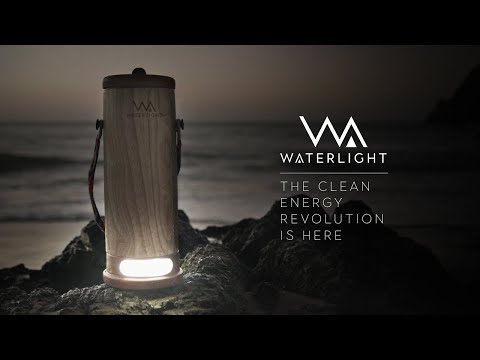
Colombian startup producing the WaterLight saltwater galvanic lantern for off-grid communities — the direct product analog, now deployed in Southeast Asia.
Philippines galvanic cell lamp by Aisa Mijeno — the original proof of concept for saltwater lighting in island communities with no reliable grid.
More Clean Energy ideas
Other climate businesses we want built.