Idea Bank — Request for Climate Startups
Rooftop Solar EV Charger
Portable rooftop solar panels that trickle-charge EVs off-grid, built for BD's sparse charging network.
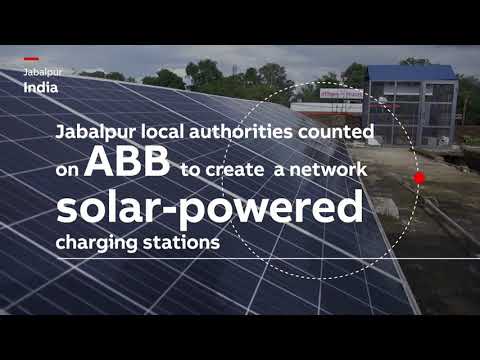
The ask
Design, manufacture, and sell a bolt-on rooftop solar charging kit for electric three-wheelers and light four-wheelers in Bangladesh — a lightweight panel array that clips to the vehicle or its overnight parking shelter and adds 20–40 km of range per day without grid access.
Why now
GoSun and several Chinese manufacturers have demonstrated that vehicle-mounted solar is technically viable for low-speed EVs. BD's electric three-wheeler (easy bike) fleet has passed 1.5 million vehicles with almost no charging infrastructure outside Dhaka — most drivers charge via extended domestic household outlets at low efficiency. Solar module prices have fallen below $0.18/Wp; a 400 W kit costs under $80 wholesale. BD has 5.3 peak sun hours per day — among the best in the world for this application.
Why Bangladesh
The easy-bike driver earns ৳600–1,000 per day and spends ৳80–150 on grid charging (often via extension cords at inflated rates). A rooftop solar kit at ৳15,000–20,000 that cuts daily charging cost by 60 % pays back in 4–6 months — a compelling ROI for a working-capital-constrained operator. The kit doubles as a shade canopy for the driver and passengers, adding a comfort sell in a country where summer temperatures reach 42 °C. Distribution through easy-bike dealers and microfinance channels (BRAC, Grameen) is a natural fit.
As a business
Sell kits through the existing easy-bike dealer network and via BRAC/ASA microfinance EMI schemes. Revenue per kit: ৳18,000–25,000 (4–6x hardware cost). After-market revenue from replacement panels and installation service. The defensible position is local assembly and dealer relationships; Chinese kit importers face the same customs duties (25–37 %) that protect a local assembler.
Economics
Move the sliders to model your own rooftop solar EV charger business. Defaults are order-of-magnitude estimates — pressure-testing them is part of what a founder pitches us.
Model a rooftop solar EV-charger kit business
Clears its setup cost after ~6 months, then profit (volt) from there. Hover or tap the chart for any month.
Illustrative model — defaults are order-of-magnitude estimates from public data, not a forecast. Pressure-test every number before you build.
What AimHuge would back
We want a hardware founder who has a working prototype installed on at least 10 easy bikes with 3+ months of real-world data (range added, durability, driver satisfaction). AimHuge Holdings has direct relationships with easy-bike dealers and BRAC Microfinance — the distribution problem is solvable if the product works. This aligns closely with AimHuge Energy's EV infrastructure thesis.
Impact
A 400 W rooftop kit on an easy-bike displaces roughly 0.65 kWh/day of grid electricity charged via inefficient extension-cord methods — about 0.5 kgCO₂e/day or 182 kgCO₂e/kit/year. At 200 kits/month scale (2,400/yr deployed), annual avoided emissions reach ~440 tCO₂e; across the 1.5 million easy-bike fleet the addressable abatement exceeds 270,000 tCO₂e/yr. Each driver saves ৳40–90/day in charging costs, keeping roughly US$30 million in aggregate purchasing power inside the local economy rather than flowing to grid utilities.
Also being built elsewhere
Companies proving the model in other markets.
Rooftop solar EV charger kit that unfolds from a roof-rack carrier; proves the product category for consumer-grade vehicle-mounted solar charging.
Sri Lankan electric three-wheeler with integrated solar roof panel — the nearest South Asian proof of concept for solar-charged EV rickshaws.
More Clean Energy ideas
Other climate businesses we want built.