Idea Bank — Request for Climate Startups
Off-Grid Rural Energy Systems
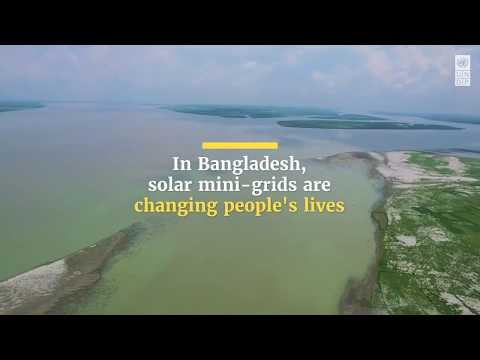
Turnkey off-grid solar-storage packages for Bangladesh's char and remote coastal communities.
The ask
Build a company delivering and maintaining complete off-grid energy systems — solar generation, battery storage, and productive-use appliances — to Bangladesh's char islands and remote coastal communities that are structurally uneconomic for grid extension, monetised through pay-as-you-go microfinance.
Why now
Bangladesh's grid electrification rate is officially 96%, but that figure masks a large population on unstable or unconnected service: roughly 3–4 million people on char islands and the coastal fringe have nominal grid connections that deliver power only 4–8 hours per day. Battery storage costs have fallen 85% since 2015 (BloombergNEF); lithium iron phosphate (LFP) packs suitable for a home or small business system now cost under USD 150/kWh. The jungle off-grid proof point (this idea's origin) is simply validation that solar + battery self-sufficiency is technologically stable — the business question is how to scale distribution in Bangladesh.
Why Bangladesh
IDCOL's solar home system programme already has the distribution rails — 65 partner organisations, rural microfinance channels, technician training networks. The gap is that IDCOL's SHS product is a small (20–50W) lighting-only system; productive-use applications (irrigation pumps, rice mills, cold storage, fish dryers) require 1–5 kWp systems with battery backup that IDCOL has not yet standardised. The productive-use segment generates 3–5× the willingness to pay of lighting-only: a char island fish trader who can run a freezer pays for the system from the first month.
As a business
Revenue comes from system sales (upfront or PAYG financed through a partner MFI) and from O&M service contracts (৳300–500/month per system). The PAYG model — popularised by M-KOPA in East Africa and Solaris in Zambia — converts capital cost into a monthly instalment of ৳600–1,200 that is competitive with what a household currently spends on kerosene and diesel generator fuel. Carbon credit revenue under IDCOL's Gold Standard methodology adds ৳800–1,500 per system over five years.
Economics
Move the sliders to model your own off-grid energy business. Defaults are order-of-magnitude estimates — pressure-testing them is part of what a founder pitches us.
Model an off-grid solar system business
Clears its setup cost after ~2 months, then profit (volt) from there. Hover or tap the chart for any month.
Illustrative model — defaults are order-of-magnitude estimates from public data, not a forecast. Pressure-test every number before you build.
What AimHuge would back
We want a founder who has an IDCOL partner organisation relationship and has already deployed 200+ systems with measurable repayment data. The productive-use segment is the right focus — we are not interested in another lighting-only SHS company. The winning team brings a PAYG software stack (or a white-label deal with one) and a fish-trader or agro-processor as their anchor commercial customer archetype.
Impact
Each 1–5 kWp productive-use off-grid system displaces an average of 1.1 tCO₂e per year compared to diesel generators and kerosene lanterns used on char islands and coastal fringe communities. At 150 systems per month the fleet avoids roughly 2,000 tCO₂e annually while simultaneously creating O&M technician employment across remote areas. By displacing diesel — almost entirely imported — each system saves approximately $120/year in foreign exchange, making a 2,000-system deployed base worth ~$240,000/year of FX retained in Bangladesh.
Also being built elsewhere
Companies proving the model in other markets.
82 million people reached with PAYG solar across 40 countries — proves village-scale productive-use model at scale.
8 million off-grid beneficiaries across 9 countries using mini-grids and solar home systems with PAYG financing.
More Clean Energy ideas
Other climate businesses we want built.