Idea Bank — Request for Climate Startups
China Clean Energy Playbook
A policy and investment roadmap adapting China's solar and wind scale-up model for Bangladesh.
The ask
Develop a commercial research and advisory product — a structured playbook with data, case studies, and a replicable policy framework — that helps BD government ministries, development banks, and private developers replicate the cost and speed dynamics of China's solar and wind build-out.
Why now
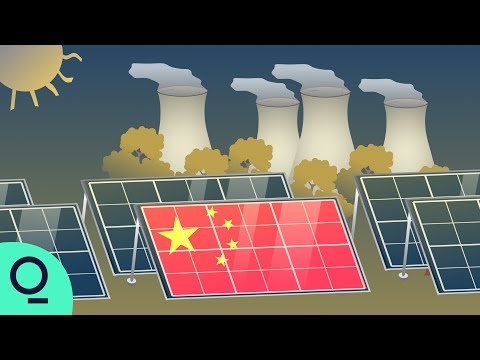
China installed 217 GW of solar in 2023 alone — more than the rest of the world combined — driven by a combination of local manufacturing incentives, standardised grid-connection protocols, and volume procurement. The costs are now publicly documented, the supply chain is global, and the policy mechanisms are well understood. BD's SREDA has ambitious targets (40 % renewable by 2041) but lacks an implementation playbook grounded in the specific economics of the BD grid, land market, and financing environment.
Why Bangladesh
BD is spending $3–4 billion per year on fuel oil imports to run power plants that were meant to be temporary. The IEA, World Bank, and AIIB are all offering concessional finance for renewable transition — but BD ministries lack the technical capacity to structure and evaluate projects at the speed those institutions require. An advisory firm that can translate China's execution model into BD's regulatory context could capture a slice of every major renewable procurement over the next decade.
As a business
Revenue from advisory retainers with development banks (ADB, IFC, AIIB — all have BD offices and active renewable pipelines), government technical-assistance contracts (SREDA, BPDB), and private-developer due diligence. A research-and-advisory firm in this niche in BD could sustain ৳5–15 crore/year in fees with a team of six to ten analysts. The playbook itself is also a publishing and conference product — a white paper that generates speaking and licensing revenue.
Economics
Move the sliders to model your own energy-advisory firm. Defaults are order-of-magnitude estimates — pressure-testing them is part of what a founder pitches us.
Model a clean-energy advisory business
Clears its setup cost after ~1 months, then profit (volt) from there. Hover or tap the chart for any month.
Illustrative model — defaults are order-of-magnitude estimates from public data, not a forecast. Pressure-test every number before you build.
What AimHuge would back
This is a services business, not a venture bet — AimHuge wouldn't lead a funding round, but we would incubate or co-launch this as a strategic asset, as it directly feeds deal flow into our energy portfolio. We want a founder with policy-economics credentials and existing relationships at SREDA or one of the multilateral development banks in Dhaka.
Impact
If this advisory product helps Bangladesh structure even one major 50 MW solar tender per year, it displaces roughly 65,000 tCO₂e annually versus gas peakers — and each retainer client that successfully closes a project multiplies that leverage. At full operating scale (six retainer clients, ৳15 crore/year in fees) the firm could influence 200–500 MW of new renewables procurement, cutting 250,000–650,000 tCO₂e/yr off Bangladesh's grid emissions. The FX angle is direct: every MW of domestic solar that replaces imported LNG saves approximately $600,000/yr in fuel imports.
Also being built elsewhere
Companies proving the model in other markets.
Independent energy think-tank that publishes data-driven analysis on the clean energy transition; comparable advisory/research model for public and private sector clients.
Strategic research and advisory on clean energy economics; subscription and project-advisory model that BD development banks already cite.
Center on Global Energy Policy — produces China clean-energy playbook analysis and advises developing-country governments on transition strategy.
More Clean Energy ideas
Other climate businesses we want built.