Idea Bank — Request for Climate Startups
Artistic Solar Panels
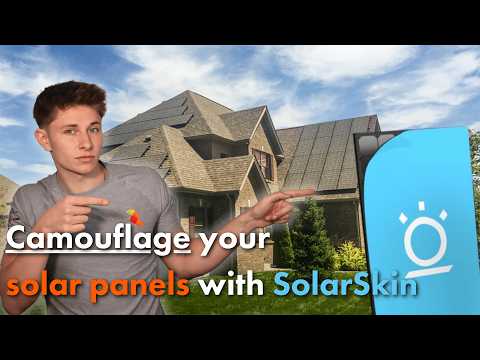
Print culturally resonant patterns onto solar panels to overcome aesthetic objections and drive rooftop adoption.
The ask
Start a solar panel customisation and installation company in Bangladesh that silk-screens or digitally prints traditional Bengali motifs, geometric patterns, or brand artwork onto monocrystalline solar panels — reducing the aesthetic barrier that blocks rooftop solar adoption in heritage districts, upmarket residential areas, and corporate campuses.
Why now
Rooftop solar in Bangladesh is growing at 35% annually but penetration of commercial and residential rooftops in Dhaka's heritage zones remains near zero, primarily due to aesthetic objections from building owners and local conservation boards. Swiss company Solaxess and Dutch startup Kameleon Solar have both proven that digitally printed overlays reduce panel power output by only 10–20% — a commercially acceptable trade-off when the alternative is no panel at all. The printing technology (UV-stable ceramic inks on tempered glass) has become available through standard Dhaka printing suppliers.
Why Bangladesh
Bangladesh has a rich tradition of nakshi kantha embroidery patterns, jamdani weave motifs, and Islamic geometric art that translate naturally to repeating solar-panel overlays. Corporate campuses in Dhaka — RMG factories, banks, hospitals — need rooftop solar for their ESG metrics but face architect pushback on aesthetics; branded panels solve both problems simultaneously. The country's significant mosque and madrasa building stock represents an underserved solar market where culturally resonant panel design could unlock a new segment.
As a business
Revenue is a blended per-panel premium (৳2,000–6,000 above standard panel cost) charged to the system installer, plus design fees for custom pattern development. Standard panel installation margins are thin; the artistic customisation layer is where the real margin sits — it's a design and printing business grafted onto a commodity energy product. Licensing the design library to installers across Bangladesh and eventually South Asia is the scaling path.
Economics
Move the sliders to model your own artistic solar panel business. Defaults are order-of-magnitude estimates — pressure-testing them is part of what a founder pitches us.
Model an artistic solar panel business
Clears its setup cost after ~10 months, then profit (volt) from there. Hover or tap the chart for any month.
Illustrative model — defaults are order-of-magnitude estimates from public data, not a forecast. Pressure-test every number before you build.
What AimHuge would back
A founder pairing a graphic designer or textile artist with a solar installer who has already customised a minimum of one rooftop installation and can show the customer's willingness to pay the premium. We would want to see a licensing model in the pitch — the business only gets interesting at scale if the design library is licensed to a network of installers, not if the founder is printing panels one at a time.
Impact
By removing the aesthetic objection that blocks rooftop solar adoption in heritage districts and upmarket Dhaka neighbourhoods, artistic panels unlock a latent GW-scale installation opportunity that conventional rigid panels cannot address. Each 200-panel customisation batch (default) adds roughly 50 kWp of new solar capacity, generating approximately 75 MWh/year and displacing around 53 tCO₂e annually from coal-fired grid power. At Bangladesh's 35% rooftop-solar growth rate, an aesthetic product that expands the addressable market by even 10% could catalyse thousands of additional installations annually — the impact multiplier of an enabling technology far exceeds the direct output of the customisation business itself.
Also being built elsewhere
Companies proving the model in other markets.
MIT-founded company printing custom graphics onto solar panels at 17–20% net efficiency — the direct technology and aesthetic model for Bangladesh's heritage-district market.
Nanotechnology-based white solar laminate enabling BIPV on building facades; proves premium aesthetic solar commands 2–3× hardware margin over standard panels.
More Clean Energy ideas
Other climate businesses we want built.