Idea Bank — Request for Climate Startups
Wildlife Crossing Infrastructure
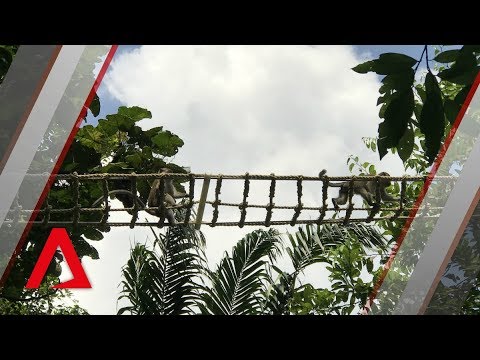
Rope bridges and canopy connectors that restore biodiversity corridors across fragmented habitats.
The ask
Build a design, supply, and installation business for wildlife crossing infrastructure — rope canopy bridges, culverts, and vegetated overpasses — sold to road and rail developers, national park authorities, and conservation NGOs in Bangladesh and across South Asia.
Why now
Bangladesh has approved over 4,000 km of new national highways and expressways under its Delta Plan 2100 and ADB-funded road projects — nearly all of them cutting through wetland and forest corridors. IFC and World Bank environmental safeguards now require wildlife connectivity assessments for any road project they finance, and Bangladesh's Road and Highway Department has been notified by lenders on several projects. The solution — rope bridges and box culverts designed for specific species — costs ৳1–8 lakh per crossing versus ৳5–50 crore for a full wildlife overpass, making it cost-effective enough to deploy at scale.
Why Bangladesh
Bangladesh's Sundarbans, Chittagong Hill Tracts, and the forest corridor connecting Lawachara and Satchari national parks are under direct road-fragmentation pressure right now. Rhesus macaques, civets, pangolins, and small felids are the primary target species for rope bridge installations. The country has 27 national parks and wildlife sanctuaries, most of which are bisected by at least one paved road. Government-to-government pressure from IUCN and GIZ is already in play; a private operator who can deliver compliant, documented installations shortens the approval chain for project proponents.
As a business
Revenue comes from B2B project contracts: design (species assessment + crossing specifications), supply (manufactured rope systems, prefab culvert inserts), and installation. Customers are the road contractors themselves (passing through the cost as ESG compliance), conservation NGOs (Brac's climate arm, IUCN Bangladesh, WCS), and government departments seeking lender compliance. A monitoring-as-a-service subscription — camera traps, annual usage reports that satisfy lender ESG reporting — adds recurring revenue at low marginal cost.
Economics
Move the sliders to model your own wildlife crossing business. Defaults are order-of-magnitude estimates — pressure-testing them is part of what a founder pitches us.
Model a wildlife crossing infrastructure business
Clears its setup cost after ~6 months, then profit (volt) from there. Hover or tap the chart for any month.
Illustrative model — defaults are order-of-magnitude estimates from public data, not a forecast. Pressure-test every number before you build.
What AimHuge would back
We want a founder who sits at the intersection of civil engineering and conservation biology — someone who can write an IFC-compliant species impact report and also manage a road contractor. A partnership between a wildlife ecologist and a civil or structural engineer would be the ideal founding team. The early deals will almost certainly come through NGO networks (WCS, IUCN, BRAC) before government procurement opens up; a founder with those relationships is years ahead.
Impact
Bangladesh's 4,000 km of planned new highways under Delta Plan 2100 will fragment the Sundarbans buffer, CHT forest corridors, and the Lawachara-Satchari link — some of the last viable wildlife corridors in the Bengal tiger and pangolin range. Installing rope crossings and culverts at 40 sites per year (default) prevents habitat isolation that, unmitigated, can cause local population collapse within a generation for low-mobility species. The biodiversity credit market (Verra BioCarbon, ART-TREES) is developing monitoring-verified protocols for connectivity infrastructure that could generate $5–20 per species-crossing-event. The monitoring subscription adds a high-margin recurring revenue stream while producing the IFC ESG documentation that unlocks DFI disbursements for road contractors.
Also being built elsewhere
Companies proving the model in other markets.
Interdisciplinary wildlife-crossing design and evaluation partnership — the technical methodology source for IFC-compliant crossing specifications in South Asia.
Largest wildlife crossing project globally ($90M, over LA freeway) — demonstrates that private philanthropy + public procurement can fund crossings at scale, a model replicable with DFI money in Bangladesh.
More Mobility & Cities ideas
Other climate businesses we want built.