Idea Bank — Request for Climate Startups
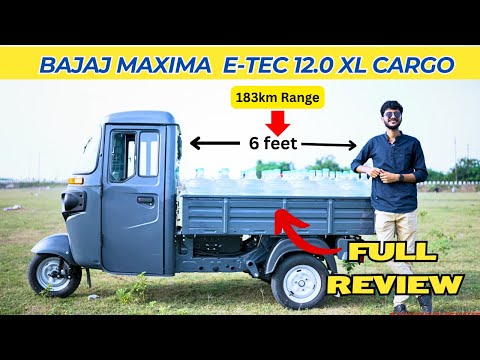
Electric Cargo Trikes
Assemble and lease electric cargo tricycles for last-mile delivery in Bangladesh's dense city cores.
The ask
Assemble electric cargo tricycles domestically from imported Chinese kits and operate a lease-to-own programme targeting last-mile delivery companies, market vendors, and small logistics operators in Dhaka, Chittagong, and secondary cities.
Why now
Chinese electric cargo trike platforms (250–750 W hub motors, 48–72 V lithium packs) are now available FOB Guangzhou for USD 600–900 — cheap enough that a lease-to-own scheme is cashflow-positive from month two. Bangladesh's BRTA has issued operating permits for battery-powered three-wheelers since 2021; the regulatory window is open. E-commerce logistics (Pathao, Shohoz, Chaldal) are growing 30–40 % per year and actively seeking lower fuel-cost last-mile options.
Why Bangladesh
Dhaka has one of the highest vehicle density / road-width ratios in the world — narrow lanes make a compact cargo trike strictly superior to a van or CNG auto for intra-neighbourhood delivery. CNG trike (Nasiman) operating cost runs ৳800–1 200/day in fuel; an electric cargo trike costs ৳80–120/day in electricity at current tariffs, a 90 % saving that makes the lease payment easy to absorb. Bangladesh assembles bicycles and auto-rickshaws domestically; cargo trike assembly is a natural adjacency for existing factories in Gazipur.
As a business
Revenue from lease-to-own instalments (৳4 000–6 000/month over 24 months) and, for the fleet-operator segment, monthly fleet-management and battery-swap service fees. Total cost of ownership over 3 years for the operator is 40–50 % below a CNG equivalent, enabling aggressive customer acquisition. The company captures the financing spread plus a battery-lifecycle service margin. At 1 000 units on road the model reaches operating breakeven; at 5 000 units the battery-swap network becomes a standalone asset.
Economics
Move the sliders to model your own electric cargo trike leasing business. Defaults are order-of-magnitude estimates — pressure-testing them is part of what a founder pitches us.
Model an electric cargo trike lease business
Clears its setup cost after ~23 months, then profit (volt) from there. Hover or tap the chart for any month.
Illustrative model — defaults are order-of-magnitude estimates from public data, not a forecast. Pressure-test every number before you build.
What AimHuge would back
A founder with an assembled, road-tested prototype, BRTA type-approval in hand, and 20–50 paying lease customers already generating repayment data. AimHuge will lead a Series A to fund the first 500-unit fleet production run and the battery-swap station network in two cities. Strong preference for a founder with prior fintech or leasing experience — the credit-risk model matters as much as the hardware.
Impact
Replacing a CNG cargo three-wheeler (consuming ৳800–1,200/day of compressed gas) with an electric equivalent eliminates roughly 1.5–2.2 tCO₂e per vehicle per year based on BPDB's grid emission factor of ~0.6 kg CO₂e/kWh versus CNG at ~2.0 kg CO₂e/km-equivalent. At 500 active trikes the fleet avoids ~900 tCO₂e/year and saves operators an estimated $450/vehicle/year in fuel costs — money that stays in the local economy. Each 50-unit batch of leased trikes supports roughly 5–8 full-time service and operations jobs. There is no direct import substitution since battery packs are currently imported, but local assembly value-adds reduce the FX outflow per unit.
Also being built elsewhere
Companies proving the model in other markets.
18,000 e-bikes across six African countries using a battery-swap + lease model — the closest business-model analog for South Asia cargo trikes.
4,000+ electric motorbikes leased to gig workers via battery-swap, proving the lease-to-own model in a low-income emerging market.
300,000+ EV deliveries across cargo and passenger three-wheelers — demonstrates the South Asian mass-market for electric cargo three-wheelers.
More Mobility & Cities ideas
Other climate businesses we want built.