Idea Bank — Request for Climate Startups
Urban Gondola Transit
Electric aerial gondola systems for hilly South Asian cities with low infrastructure footprint.
The ask
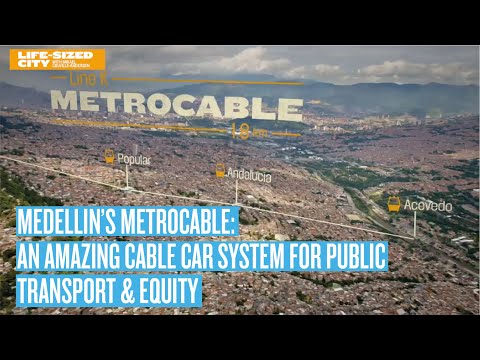
Develop and operate electric aerial gondola transit lines in hilly South and Southeast Asian cities — starting with Chittagong's hill tracts or similar terrain — using proven Medellín-style technology adapted for local urban density.
Why now
Aerial gondola capital costs have dropped 40% in the past decade as ski-resort suppliers compete for urban contracts. Medellín's Metrocable and La Paz's Mi Teleférico have produced 15+ years of operating data, removing technology risk. South Asian cities are entering a wave of urban transport investment and are looking beyond conventional metro/BRT options for terrain-challenged corridors. The carbon case is straightforward: fully electric, minimal land acquisition, low embodied steel versus elevated rail.
Why Bangladesh
Chittagong (Bangladesh's second city) has significant elevation variance and dense hillside settlements — the Pahartali and Halishahar areas face genuine transit gaps that roads alone cannot solve affordably. The Chittagong Hill Tracts are even more terrain-constrained. Bangladesh's vulnerability to flooding also makes elevated transit resilient in ways that road-level systems are not. That said, this idea has the lowest Bangladesh fit of this batch — most of the country is flat delta, so the opportunity is geographically concentrated.
As a business
The model is a concession: a 20–30 year operating contract with the city government, charging per-ride fares with minimum revenue guarantees or ridership subsidies. Equipment is procured from established suppliers (Doppelmayr, Leitner); the founder's value-add is project development, financing, and local operations. A second revenue stream is tourism-facing installations in hill-station destinations (Bandarban, Rangamati).
Economics
Move the sliders to model a gondola line concession. Defaults are order-of-magnitude estimates — pressure-testing them is part of what a founder pitches us.
Model an urban gondola concession
Does not break even within 5 years at these inputs — adjust the sliders. Hover or tap the chart for any month.
Illustrative model — defaults are order-of-magnitude estimates from public data, not a forecast. Pressure-test every number before you build.
What AimHuge would back
A founder with infrastructure project development or urban transport concession experience — this is not a first-time founder idea. We would back a team that has already opened a dialogue with Chittagong City Corporation or the Bangladesh Bridge Authority, and has a credible financing plan that mixes concessional debt with city guarantees.
Impact
A single urban gondola line with 8,000 daily riders fully replaces the equivalent of 150–200 minibus trips per day, avoiding roughly 800–1,200 tCO₂e/year compared to diesel road transit at Chittagong's current mix. The fully electric system draws from the grid at ~0.3–0.5 kWh per passenger-km, one-fifth the energy of a diesel bus per passenger. Capital intensity is high but the 20–30 year operating concession generates bond-like cash flows suitable for climate-finance instruments (green bonds, concessional DFI debt). Construction creates 200–400 skilled jobs during the 18–24 month build phase; operations sustain 30–50 permanent technical roles.
Also being built elsewhere
Companies proving the model in other markets.
Primary equipment supplier and technical operator for Metrocable Caracas, Medellín, and La Paz — the equipment and concession-structure template for any South Asian urban gondola.
Private concession developer that financed and operates a 30–40 year gondola concession in Quito — the business-model template for a Chittagong concession bid.
More Mobility & Cities ideas
Other climate businesses we want built.