Idea Bank — Request for Climate Startups
Solar Parking Canopy Developer
Install solar canopies over urban parking lots, selling power to building owners and EV charging.
The ask
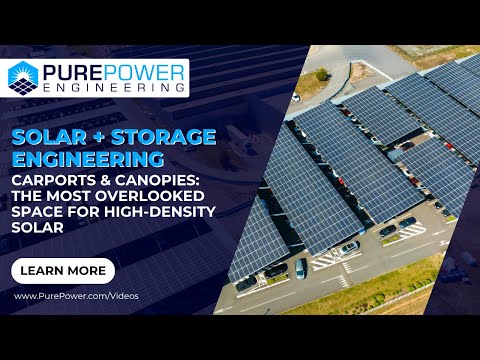
Develop a concession business that installs solar canopies over commercial and government parking lots in Bangladeshi cities, selling the electricity to the host building under a PPA and the shade to parked EV fleets — turning dead urban tarmac into a dual-income renewable asset.
Why now
Solar module costs have fallen below $0.15/W at scale, making parking canopy paybacks viable at under eight years even without subsidies. Bangladesh's urban heat island effect is intensifying; shaded parking is increasingly valued by retail and office tenants who compete for footfall in summer. Dhaka's rapid EV uptake (three-wheelers, corporate fleets) is creating stranded charging demand that canopy-mounted chargers can serve without grid upgrades.
Why Bangladesh
Dhaka, Chittagong, and Sylhet have dense clusters of shopping malls, hospitals, government complexes, and export-processing zones with large surface lots that owners cannot easily build on but are happy to lease airspace above. Grid tariff volatility — BPDB has increased commercial rates five times since 2021 — makes on-site solar generation compelling for cost-sensitive building operators. The canopy structure doubles as flood-resilient infrastructure: elevated metalwork is far less vulnerable than ground-mount solar in the delta.
As a business
The developer finances, installs, owns, and operates the canopy. Revenue comes from a 20-year PPA with the host building (selling power at 10–15% below grid tariff), EV charging fees from parked vehicles, and optional rooftop lease payments from telecom or advertising. The host gets free shade, reduced cooling load, and grid backup; the developer retains asset ownership and carbon credits from displaced grid power.
Economics
Move the sliders to model your own solar parking canopy project. Defaults are order-of-magnitude estimates — pressure-testing them is part of what a founder pitches us.
Model a solar parking canopy project
Clears its setup cost after ~3.7 years, then profit (volt) from there. Hover or tap the chart for any month.
Illustrative model — defaults are order-of-magnitude estimates from public data, not a forecast. Pressure-test every number before you build.
What AimHuge would back
A developer with a signed LOI from at least one anchor site — a hospital, export-processing zone, or government parking authority — and a clear PPA structure. AimHuge is interested because this intersects with our EV charging infrastructure thesis and generates long-duration, bond-like cash flows suitable for blended-finance instruments.
Impact
At the default 500 kW installed capacity and 18% capacity factor, the canopy generates ~788 MWh/year, avoiding approximately 473 tCO₂e/year at BPDB's grid emission factor of 0.6 kg CO₂e/kWh — equivalent to displacing 35,000 litres of diesel. The shade structure cuts the cooling load of the host building by an estimated 8–15%, a direct electricity saving that compounds the carbon benefit. EV charging bays embedded in the canopy absorb daytime solar surplus without grid export complications, accelerating fleet electrification for the host. Each project creates 2–4 permanent O&M jobs and supports 15–30 construction jobs during build.
Also being built elsewhere
Companies proving the model in other markets.
Pan-Asia solar developer selling PPAs to corporates — the business model template, though focused on rooftop rather than canopy structures.
Operates on-site solar under PPA in Bangladesh already (Decathlon partnership) — the nearest direct comparable and potential acquirer for a canopy-focused operator.
More Mobility & Cities ideas
Other climate businesses we want built.