Idea Bank — Request for Climate Startups
Pedal Water Bikes for School Access
Craft pedal-powered water bikes giving haor children safe, daily school transit.
The ask
Build a small-scale manufacturing and distribution business producing low-cost pedal-powered water bikes for Bangladesh's haor and riverine communities, where seasonal flooding makes conventional roads impassable for up to six months a year and school attendance collapses.
Why now
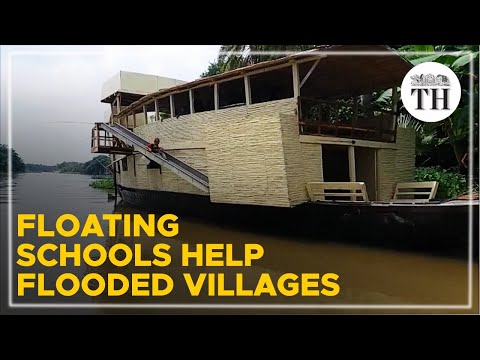
Bangladesh's haor basin — roughly 7 million people across Sylhet and Sunamganj divisions — faces worsening flash floods as monsoon intensity increases. School enrollment data from BANBEIS shows dropout spikes precisely in the haor districts each wet season. Pedal water bikes are a tested form: Bangladeshi NGOs and Vietnamese villages have both validated the concept; the missing piece is a manufacturable, serviceable product at a price haor families can reach with microfinance.
Why Bangladesh
The haor region alone covers 8,000 km² of seasonally inundated land and holds roughly 7 million residents with few motorized boat alternatives for short trips. BRAC, DSK, and government stipend programs already move money to haor school children — they need a vehicle to attach it to. Bangladesh's steel-tube welding and small-boat fabrication cottage industry is mature enough to produce frames locally, keeping unit costs low and enabling a repair ecosystem in-region.
As a business
Revenue comes from two streams: direct unit sales to NGOs, government school-access programs, and district councils (bulk procurement); and a fee-based rental fleet operated through village entrepreneurs. Margin sits in the frame and float assembly — sourced locally — while branded flotation pontoons (injection-moulded HDPE) act as a proprietary component. Microfinance tie-ups with BRAC or Grameen convert a ৳15,000 sticker price into an affordable instalment for individual families.
Economics
Move the sliders to model your own water bike operation. Defaults are order-of-magnitude estimates — pressure-testing them is part of what a founder pitches us.
Model a water bike production unit
Clears its setup cost after ~14 months, then profit (volt) from there. Hover or tap the chart for any month.
Illustrative model — defaults are order-of-magnitude estimates from public data, not a forecast. Pressure-test every number before you build.
What AimHuge would back
We want a founder with manufacturing chops in Bangladesh's informal metalwork sector who has either an NGO distribution channel locked up or a government pilot in hand. Bonus points for a team already embedded in a haor district — someone who knows the seasonal flooding calendar and has tested a prototype in actual floodwater. We are not backing a pure hardware play without a distribution moat.
Impact
In the haor basin's 8,000 km² of seasonal inundation, enabling reliable school access for even 5% of the 7 million residents can add 20–40 school days per year to children who currently miss the wet season entirely. Each water bike sold displaces roughly 0.3 tCO₂e/year versus a motorised boat alternative (petrol longtail motor) while requiring zero imported fuel. The local steel-and-HDPE manufacturing model creates workshop jobs within the haor region itself — one of Bangladesh's most economically marginalised zones — keeping supply chains short and repair ecosystems local. Improved school attendance in haor districts produces compounding livelihood returns that far exceed the direct economic value of the vehicles.
Also being built elsewhere
Companies proving the model in other markets.
More Mobility & Cities ideas
Other climate businesses we want built.