Idea Bank — Request for Climate Startups
Lights-Out EV Assembly
Highly automated electric vehicle assembly that slashes per-unit cost through robotics and dark-factory design.
The ask
Build Bangladesh's first robotics-forward EV assembly plant — starting with electric three-wheelers or small commercial vehicles, targeting 30–40% lower per-unit assembly labour cost than conventional lines — positioning Bangladesh as a low-cost EV manufacturing hub for South and Southeast Asian markets.
Why now
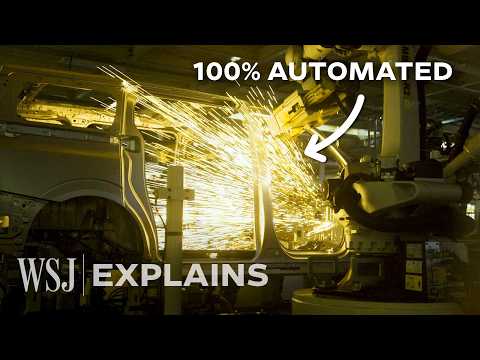
Zeekr's lights-out factory in Hangzhou demonstrated in 2023 that a 2,000-robot facility can produce a vehicle every 51 seconds with three workers per shift. The technology stack — collaborative robots from Universal Robots and FANUC, vision-guided assembly, automated guided vehicles — is now available at 30–40% lower cost than five years ago and is routinely installed in Bangladesh's own garment sector. Bangladesh's EV adoption is accelerating: rickshaws, CNGs, and small commercial vehicles are converting at 50,000–80,000 units per year. A domestic assembly plant at competitive cost changes the import-versus-local-assembly equation decisively.
Why Bangladesh
Bangladesh currently imports complete knock-down (CKD) EV kits from China and assembles them semi-manually, with value addition of only 15–20%. A robotics-forward line raises value addition to 50–60%, satisfies local content requirements for government procurement, and qualifies for Supplementary Duty exemptions under the National Budget's EV incentive scheme. Labour cost remains the cheapest in South Asia, but automation is the hedge: as volumes scale, per-unit cost falls on a fixed robot-capex curve, not a linear headcount curve.
As a business
The assembly plant operates as a contract manufacturer — it does not own the EV brand. Revenue is a per-unit assembly fee charged to EV brand owners (domestic brands like AimHuge, Walton Electric, Runner; and potentially regional brands entering Bangladesh). A second revenue stream is spare-parts fabrication for the installed base. The contract-manufacturing model keeps the plant continuously utilised across multiple brand customers, reducing the risk of any single brand's volume fluctuation.
Economics
Move the sliders to model your own lights-out EV assembly plant. Defaults are order-of-magnitude estimates — pressure-testing them is part of what a founder pitches us.
Model a lights-out EV assembly plant
Clears its setup cost after ~4.4 years, then profit (volt) from there. Hover or tap the chart for any month.
Illustrative model — defaults are order-of-magnitude estimates from public data, not a forecast. Pressure-test every number before you build.
What AimHuge would back
We want a founding team that combines manufacturing operations expertise (someone who has run a production floor with 200+ workers or has managed industrial automation deployment) with an EV industry relationship — a brand or distributor willing to be the anchor off-take customer from Day 1. This is too capital-heavy for a solo technical founder; we are looking for a consortium approach, potentially with a strategic investor from the automotive components sector.
Impact
A robotics-forward domestic assembly plant raises Bangladesh's EV local content from 15–20% to 50–60%, diverting import FX back into local wages, energy, and materials. At 8,000 vehicles/year (default), the plant supports roughly 150–250 direct jobs (higher-skill, higher-wage than garment-sector norms) plus a broad supplier ecosystem. Each locally assembled three-wheeler or commercial EV that displaces an imported ICE vehicle avoids approximately 1.5–2.5 tCO₂e/year per unit; at 8,000 units the annual avoided emissions reach 12,000–20,000 tCO₂e. The contract-manufacturing model de-risks the capital investment by spreading capacity across multiple EV brands, making the plant resilient to any single brand's volume cycle.
Also being built elsewhere
Companies proving the model in other markets.
Bangladesh's first domestic EV manufacturing plant in Chattogram — the incumbent benchmark, currently at low automation, showing the gap a robotics-forward entrant would exploit.
Xiaomi's fully automated HyperFactory demonstrates the lights-out assembly model that a Bangladesh contract manufacturer would adapt at smaller scale with lower capex.
More Mobility & Cities ideas
Other climate businesses we want built.