Idea Bank — Request for Climate Startups
Dhaka EV Bus Operator
Electric bus fleet operator for Dhaka city routes, using Chiang Mai's pilot as a template.
The ask
Launch an electric bus operating company for Dhaka urban routes, using Chiang Mai's proven EV bus model and Chinese bus hardware as the playbook, and positioning for a BRTC partnership or concession.
Why now
Chiang Mai's electric bus pilot — run on Chinese-assembled vehicles adapted for tropical conditions — has produced two years of operating data showing reliability, cost-competitiveness with diesel, and strong rider uptake. Bangladesh's government has committed to electrifying 30% of public transport by 2030 and is actively seeking private operators to deploy alongside BRTC. Chinese EV bus prices have fallen to $80,000–120,000 per vehicle, and Chinese OEM financing is increasingly available for South Asian operators.
Why Bangladesh
Dhaka has some of the worst urban air quality in Asia; diesel buses are a major contributor and the political will for electrification exists. BRTC operates a decaying diesel fleet with chronic maintenance costs — a private EV operator offering better reliability and lower emissions is commercially and politically attractive. The power grid in Dhaka metro is stable enough for depot charging; the Solar + grid dual-feed model used in Chiang Mai is directly replicable. Bangladesh's flat geography and shorter average route lengths suit the battery ranges of current mid-price Chinese EV buses.
As a business
Revenue from per-kilometre service contracts with BRTC or DNCC (Dhaka North City Corporation), or from direct fare collection on concession routes. The EV operating-cost advantage over diesel (fuel + maintenance ~40% lower) is the margin driver; the business case strengthens further if carbon credits are stacked on top. Fleet financing via DFI green bonds (ADB, IFC) and government viability-gap funding is the capital structure template used across South and Southeast Asia.
Economics
Move the sliders to model an EV bus operation. Defaults are order-of-magnitude estimates — pressure-testing them is part of what a founder pitches us.
Model a Dhaka EV bus fleet
Does not break even within 5 years at these inputs — adjust the sliders. Hover or tap the chart for any month.
Illustrative model — defaults are order-of-magnitude estimates from public data, not a forecast. Pressure-test every number before you build.
What AimHuge would back
A founder with a prior relationship inside BRTC, DNCC, or the Ministry of Road Transport — this business lives or dies on the government contract, and we need to see that relationship before capital goes in. Ideally a team that has already run a smaller fleet operation (CNGs, minibuses) and understands Dhaka's informal transport economy from the inside.
Impact
A 20-bus electric fleet operating 180 km/day each displaces roughly 390 tCO₂e/year compared to an equivalent diesel fleet (diesel at ~1.0 kg CO₂e/km vs grid EV at ~0.18 kg CO₂e/km on BPDB mix). Scaling to 200 buses — a single concession route — avoids ~3,900 tCO₂e/year while eliminating the NOₓ and particulate emissions that cost Dhaka an estimated 1–2% of GDP in health impacts annually. Per-kilometre operating cost savings of 30–40% versus diesel create a commercially durable business even without carbon credits. Bangladesh's flat delta terrain maximises battery range utilisation, making the economics more favourable than in hillier South Asian cities.
Also being built elsewhere
Companies proving the model in other markets.
2,330 BYD-chassis electric buses operating in 35 Indian cities under city concession contracts — the closest comparable for a BRTC/DNCC partnership model.
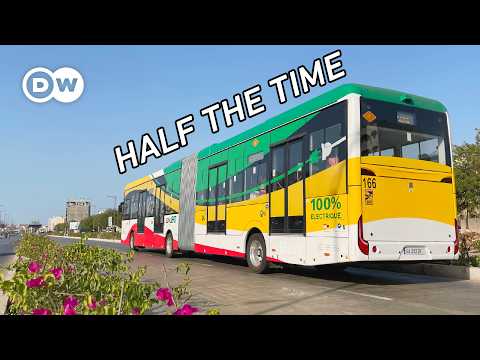
Award-winning all-electric BRT system in Dakar proves the EV-bus concession model is bankable in a low-income tropical city with similar grid reliability constraints.
More Mobility & Cities ideas
Other climate businesses we want built.