Idea Bank — Request for Climate Startups
Regenerative Land Investment Fund
An investment vehicle backing nature-based land restoration projects in Bangladesh and South Asia.
The ask
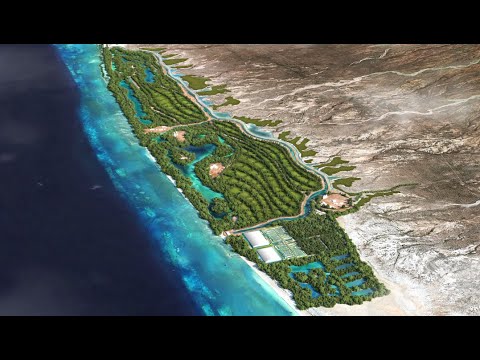
Structure and operate a regenerative land investment fund that acquires degraded agricultural and coastal land in Bangladesh, restores it through mangrove reforestation, agroforestry, and wetland rehabilitation, and generates returns through a blended stream of ecosystem service payments, carbon credits, and sustainably harvested forestry products.
Why now
The voluntary carbon market for high-integrity nature-based solutions has re-stabilised after the 2023 crediting crisis; mangrove carbon credits now command USD 15–35/tonne on the voluntary market (Verra VCS + CCBS double-verified). Bangladesh has an estimated 150,000 ha of degraded coastal land that was formerly mangrove cover — the restoration cost is USD 800–1,500/ha, and the 30-year carbon credit stream at current prices NPVs to USD 3,000–8,000/ha. The arithmetic works at current prices, and the Living Roots model in other markets has shown that patient capital can achieve both ecological and financial return.
Why Bangladesh
Bangladesh's Sundarbans buffer zone and the Meghna estuary coastline face active mangrove degradation from shrimp aquaculture pond encroachment and sea-level rise. The government's Delta Plan 2100 explicitly targets 100,000 ha of coastal forestation — creating a policy tailwind and potential co-investment from the government's CDMP and the GCF Bangladesh country program. Land acquisition in degraded coastal zones is possible at ৳50,000–150,000 per acre, a fraction of fertile agricultural land values, because the land is currently economically marginal.
As a business
The fund earns from three streams: carbon credit sales (primary cash flow during years 2–10), non-timber forest product harvesting (honey, Nypa palm products, crab aquaculture within restored mangrove — typically ৳15,000–40,000/ha/year), and land value appreciation as restored mangroves become coastal protection infrastructure with rising insurance value. A ৳50 crore fund deploying into 1,000 ha of restoration generates a projected 20-year IRR of 12–18% at mid-range carbon credit pricing.
Economics
Move the sliders to model your own regenerative land fund. Defaults are order-of-magnitude estimates — pressure-testing them is part of what a founder pitches us.
Model a regenerative land investment fund
Clears its setup cost after ~15 months, then profit (volt) from there. Hover or tap the chart for any month.
Illustrative model — defaults are order-of-magnitude estimates from public data, not a forecast. Pressure-test every number before you build.
What AimHuge would back
We want a fund manager with both ecological restoration credentials (forestry, wetland science) and structured finance experience — the fund vehicle needs to be bankable for institutional co-investors. The right team has a Verra VCS methodology pre-approval in hand and a government land-use agreement for a pilot 100-ha site. AimHuge Holdings would anchor the first close as a limited partner with the option to co-invest directly in specific restoration parcels.
Impact
Restoring degraded coastal land to mangrove cover sequesters carbon at 8–12 tCO₂e per hectare per year — among the highest rates of any land-based intervention — while simultaneously rebuilding storm-surge protection that saves tens of millions of dollars in cyclone damage avoided per protected kilometre of coastline. A 1,000-ha fund deploying into Bangladesh's Meghna estuary degraded buffer zone would generate 8,000–12,000 tCO₂e in annual verified credits while restoring fishery habitat that supports the livelihoods of hundreds of coastal families through mangrove honey, crab, and Nypa palm harvesting. The fund model converts what is currently a degraded economic liability — coastal land worth ৳50,000–150,000/acre because it is marginal — into a long-term productive asset with appreciating insurance value as climate risk rises.
Also being built elsewhere
Companies proving the model in other markets.
Fintech platform and crowdfunding architecture for community-based regenerative mangrove forestry with blockchain-based benefit sharing — closest structural analogue.
Ten-company private fund investing in mangrove reforestation and community livelihoods for carbon offsets; demonstrated the patient-capital, community-revenue-sharing fund model.
Mangrove blue-carbon project developer with active projects in Myanmar; co-authored the Gold Standard mangrove methodology applicable directly to Bangladesh.
More Climate Finance ideas
Other climate businesses we want built.