Idea Bank — Request for Climate Startups
Pineapple Leaf Leather
Convert pineapple leaf waste into Piñatex-style vegan leather for Bangladesh's garment export industry.
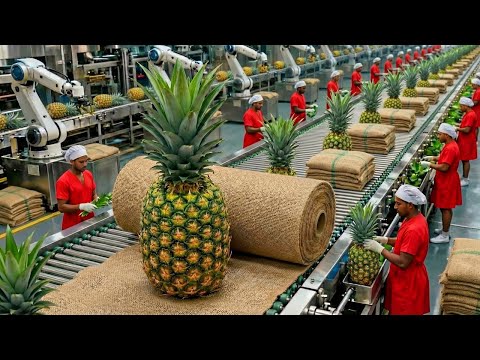
The ask
Set up a pineapple leaf fibre (PALF) extraction and leather-analogue production facility in Bangladesh's pineapple belt, selling vegan leather sheets and rolls to garment and accessory manufacturers as a certified animal-free, low-carbon alternative to chrome-tanned leather.
Why now
Ananas Anam's Piñatex has validated buyer appetite — HUGO BOSS, H&M, and Puma have all used it in commercial collections. The IP on basic PALF processing is now in the public domain or licensed liberally; several Philippine and Indian units are producing at commercial scale. EU deforestation and animal-welfare regulations are nudging luxury and mid-market brands to diversify away from bovine leather. PALF leather currently wholesales at $18–30/m², a premium the market clearly pays.
Why Bangladesh
Bangladesh produces ~300,000 metric tons of pineapple per year, concentrated in the Madhupur tract (Tangail/Mymensingh) and the Chittagong Hill Tracts. After harvest, the long-leaf biomass — roughly 3× the fruit weight — is burned or left to rot. This is a free fibre feedstock. Bangladesh already has the spinning, weaving, and finishing machinery infrastructure from its jute and textile industries; PALF processing is chemically similar to jute decortication. And the country's RMG factories are under direct buyer pressure to source sustainable materials.
As a business
Sell finished PALF leather rolls to export garment and accessories manufacturers at ৳1,800–2,800/m². The moat is GOTS/FSC certification and consistent quality — buyers pay the premium for auditability. A secondary revenue stream is selling the extracted biomass residue as mulch or biogas feedstock to local farmers, turning a waste-disposal cost into a modest credit. At 50,000 m²/year output, annual revenue is ৳90–140 million.
Economics
Move the sliders to model your own PALF leather plant. Defaults are order-of-magnitude estimates — pressure-testing them is part of what a founder pitches us.
Model a pineapple leaf leather plant
Clears its setup cost after ~6 months, then profit (volt) from there. Hover or tap the chart for any month.
Illustrative model — defaults are order-of-magnitude estimates from public data, not a forecast. Pressure-test every number before you build.
What AimHuge would back
A founder with materials science or agro-processing background who has already sourced a pilot quantity of PALF and produced sample sheets. We want the vertically integrated operator — leaf collection network to certified finished roll — not a trader who buys from one factory and sells to another. A credible export buyer LOI from one European apparel brand is the right condition for seed funding.
Impact
At Bangladesh scale — drawing on the country's 300,000-tonne pineapple harvest and its vast untapped leaf-biomass — a PALF leather industry could displace chrome-tanned bovine leather, avoiding roughly 3–5 kg CO₂e per m² of synthetic or conventional leather displaced. Scaling to 50,000 m²/month across the RMG supply chain would generate hundreds of rural jobs in leaf collection, decortication, and finishing while cutting dependence on imported chrome chemicals and animal hides. Every dollar of export revenue earned by PALF leather replaces a dollar that would otherwise leave Bangladesh to buy leather or synthetic alternatives, materially improving the country's FX position.
Also being built elsewhere
Companies proving the model in other markets.
Proved PALF leather is commercially viable and adopted by HUGO BOSS, H&M, and Puma; validated the supply-chain model from Philippine farms to European buyers.
GOTS-certified natural-fibre and bio-material textile manufacturer in Delhi serving export brands — shows the India-adjacent supply-chain template Bangladesh can replicate.
More Biomaterials ideas
Other climate businesses we want built.